Key Points for Winter Management of Pear Orchards: Good Winter Management Helps Flowering and Fruiting the Following Year
Autumn and winter are an important period when pear trees shed their leaves and enter dormancy. Strengthening pear orchard management at this time benefits the trees' growth, flowering and fruiting the following year.
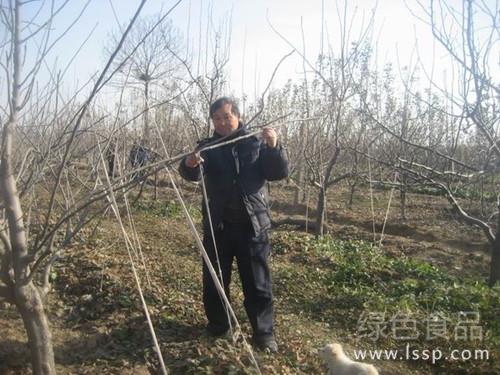
Winter Pruning of Pear Trees
I. Reasonable Fertilization:Before the end of November, apply a deep autumn fertilizer once in the pear orchard, with the amount applied accounting for more than 30% of the total annual fertilizer application, mainly using organic fertilizers such as decomposed oil cake fertilizer, residue fertilizer, composted manure, and human and livestock manure. The method is: at the drip line of the canopy of mature pear trees, dig 1-2 ring-shaped fertilization pits about 60cm long and 25cm deep and wide, and apply 30-40 kg of decomposed human, livestock and poultry water manure per tree, plus 1-1.5 kg of decomposed oil cake fertilizer (or 10-20 kg of decomposed residue fertilizer, composted manure, etc.), mixed in. For young trees, apply half or 1/4 of the amount; after fertilization, backfill the pits with soil.
II. Cultivation and Weeding:Along with the autumn fertilizer, remove weeds in the pear orchard and bury them deep in the fertilization pits. Then, deep plow the pear orchard, with shallow tillage under the canopy and deep plowing of 20-30cm between rows, and trim the edges and clear the ditches of the plots, so that the soil is loose and overwintering insect eggs (cocoons) are eliminated.
III. Tidying and Pruning:For young pear orchards planted for 1-2 years, on the basis of branch bending in the summer of that year, further bend, prop and hang the 2-4 branches that have been cultivated, keeping them at a spread of 60-70cm, so as to moderate tree vigor and form a dwarfed canopy; for mature fruiting trees, use thinning, heading back and renewal pruning methods to prune the branches, so that the canopy is well ventilated and lit, with distinct layers, achieving the goal of bearing fruit inside and out.
IV. Pest and Disease Control:In winter after the pear trees shed their leaves, take comprehensive measures to control overwintering pests and diseases.
1. Clear dead branches and fallen leaves in and around the pear orchard, prune diseased and pest-infested branches, scrape off the loose bark on the trunks, and burn or bury them deep in a centralized manner.
2. Before the onset of winter, use rice straw or mixed grass to make 1-2 small grass bundles and place them at the branching points of the pear trees to attract pests to overwinter on the grass bundles; when spring comes, burn all the grass bundles in a centralized manner, which can eliminate a large number of overwintering pests and diseases.
3. Spraying and whitewashing. After the pear trees shed their leaves and before they sprout, spray the pear orchard 1-2 times with 2-3 degrees Baume lime sulfur mixture, and use the residual dregs after use to whitewash the trunks. The whitewash can also be prepared yourself: ① 4 kg lime, 3 kg lime sulfur mixture, 0.5 kg diesel oil (kerosene), 50 kg hot water. Preparation method: first dissolve lump lime in warm water into a slurry, then add the lime sulfur mixture, and stir thoroughly; ② 5 kg lime, 0.5 kg salt, 100 g of 40% Fuxiao arsenic wettable powder, 0.5 kg diesel oil (machine oil), 50 kg water at 60°C. Preparation method: first dissolve lump lime in warm water into a lime milk slurry, then add salt, machine oil, pesticide, etc., and mix thoroughly.