What precautions should be taken when using fungicides?
What should be noted when using fungicides? Is there a netizen who can help explain? Agricultural fungicides are a class of pesticides used to control plant diseases caused by various pathogenic microorganisms, generally referring to fungicides. If used improperly, the effect will be greatly reduced, and it can also cause crop phytotoxicity; Zhongdi Web has compiled the points to note when using fungicides...
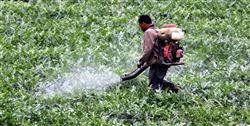 What should be noted when using fungicides? Is there a netizen who can help explain?
Agricultural fungicides are a class of pesticides used to control plant diseases caused by various pathogenic microorganisms, generally referring to fungicides. If used improperly, the effect will be greatly reduced, and it can also cause crop phytotoxicity; Zhongdi Web has compiled seven key points to note during the use of fungicides, listed below for netizens' reference.
Key point one, timing of fungicide application:
Applying the pesticide too early will cause waste of the pesticide or reduce its efficacy; applying it too late will allow a large number of pathogens to invade the host, and even if a therapeutic spray is applied, the effect will be minimal.
Key point two, concentration of fungicide used:
When spraying with liquid formulations, it is often necessary to use water to prepare or dilute the pesticide into an appropriate concentration. Too high a concentration will cause phytotoxicity and waste, while too low a concentration will have no efficacy. For some non-wettable or difficult-to-wet powders, a small amount of water should first be added to mix the pesticide liquid into a paste, and then more water should be added to prepare it for use.
Key point three, number of fungicide applications:
Fungicides are generally sprayed once every 10-15 days, and a total of 2-3 sprays is sufficient. If rain occurs after spraying, it should be re-sprayed. When applying fungicides, attention should be paid to cost and to saving pesticide.
Key point four, principles for mixing fungicides:
Generally, pesticides that easily decompose and lose efficacy when encountering alkaline substances cannot be mixed with alkaline pesticides. For example, alkaline fungicides such as Bordeaux mixture and lime sulfur mixture cannot be mixed with 1605, dimethoate, dichlorvos, etc., otherwise a chemical reaction will occur. Pesticides that may cause phytotoxicity also cannot be mixed for use. A small number of pesticides can produce a synergistic effect after mixing. For example, when dimethoate (neutral) is mixed with alkaline fungicides (such as zineb, wettable sulfur, colloidal sulfur, etc.), the efficacy will not only not be affected, but will instead increase slightly.
Key point five, alternate use of different types of fungicides:
Long-term single use of a pesticide (mainly systemic fungicides) will cause pathogens to develop resistance, making the conventional dosage of the pesticide ineffective and increasing the difficulty of control. In order to avoid the development of resistance, different types of pesticides should be used alternately, such as mixing systemic pesticides with traditional fungicides.
Key point six, methods for spraying crops:
The spray amount should be appropriate. If the application amount is too small, it cannot provide thorough protection for all parts of the plant; if too large, it is likely to cause phytotoxicity and waste. Application should be with fine, uniform droplets and even coverage, spraying both the front and back of the plants.
Key point seven, preventing phytotoxicity:
There are many reasons why pesticide application causes phytotoxicity to plants. Pesticides with strong water solubility are prone to causing phytotoxicity. Different crops also have different sensitivities to pesticides. For example, Bordeaux mixture generally does not cause phytotoxicity, while cowpea, potato, cotton, etc. are sensitive to lime sulfur mixture and are prone to phytotoxicity.
Crops at different developmental stages also respond differently to pesticides. Generally, the seedling stage and the booting and flowering stage are prone to phytotoxicity, so pesticides should be used with caution. In addition, phytotoxicity is also related to weather and meteorological conditions.
Click to get more fungicide application techniques
Click to get more pesticide application techniques