After snow, temperatures rise and vegetables tend to wilt, how should this be prevented and controlled?
In winter, after heavy snow or continuous low-temperature, sunless weather, when the temperature rises rapidly, greenhouse vegetables often wilt. If this cannot be quickly identified and targeted measures cannot be taken, in mild cases growth and development are delayed, and in severe cases the plants die. The causes of vegetable wilting after snow and the countermeasures are summarized below:
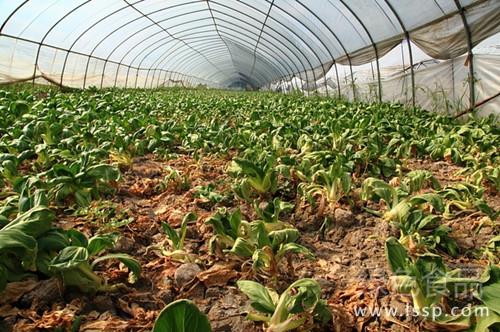
Greenhouse vegetable wilting
1. Physiological, temporary wilting.Relatively common. First, long-term low temperature and scant sunlight, with high soil and air humidity inside the greenhouse, cause the root system to be underdeveloped; second, the air temperature inside the greenhouse rises quickly and leaf transpiration increases, but the soil warms slowly, so the vegetable roots have low vigor.
Countermeasures: When the outside temperature rises quickly, pay attention to changes in the vegetables. If wilting is found, cover with straw mats or partially shade to reduce transpiration, then uncover the mats after recovery. After 2~3 days of hardening, normal management can be resumed. In addition, do not irrigate heavily; appropriately spraying foliar fertilizer can promote growth.
2. Low-temperature freeze injury.Because the temperature was low earlier, some leaves or leaf edges and tips were frozen and lost their water-retention function. In the early stage of damage, the leaves or tender tips appear water-soaked and soon dry up, while the color remains green. It is prone to occur at air vents or where the covering film is damaged.
Countermeasures: (1) Reasonable topdressing. Spraying foliar fertilizer on frozen vegetables can both improve the nutritional status and increase the concentration of cell tissue fluid, enhancing the vegetables' cold resistance and freeze resistance, and promoting recovery growth. For cucurbit and solanaceous vegetables, use a three-element compound fertilizer; for leafy vegetables, spray a 1-2% urea aqueous solution with Bihu added. For root and stem vegetables, spray 0.3% monopotassium phosphate plus Bihu. Foliar fertilizer should be sprayed evenly and thoroughly, with both sides of the leaves fully covered with the fertilizer solution. After spraying, spray once more 7-10 days later.
(2) Water promptly. After freeze injury occurs, water promptly to increase the soil heat capacity and inhibit the drop in ground temperature, which can effectively reduce and control freeze injury. Use groundwater for watering, not surface water. The amount of watering should be enough to reach the plow layer; never flood-irrigate.
(3) Ventilate scientifically. After freeze injury occurs, the greenhouse must not be closed immediately, because if the temperature rises too quickly, the frozen tissues of the vegetables will dehydrate and die. After the sun comes out, open the vents moderately, and after some time gradually narrow and close the vents. Let the greenhouse temperature rise slowly, so that the frozen tissues of the vegetables can fully absorb water, promote cell revival, and reduce tissue death.
3. Pests and diseases.Earlier, the vegetable roots or stem bases were damaged by root rot, Fusarium wilt, bacterial wilt, or underground pests. By checking the roots and stems, lesions or insect-bite marks can be found.
Countermeasures: Use partial shading to reduce transpiration and prevent the vegetables from lacking water, and at the same time carry out control according to the pests and diseases found.
In short, for vegetable wilting in winter, the causes must be clearly distinguished and correct measures taken to avoid unnecessary losses.