Key points for autumn and winter management of pomegranate trees: fertilization, pruning, winter irrigation, and pest and disease control
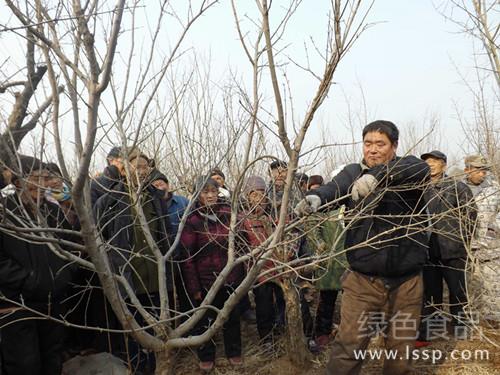
Winter pruning of pomegranate trees
1. Fertilization.After harvesting the fruit in autumn, apply an appropriate amount of human manure and urine, which helps the pomegranate tree accumulate nutrients. Fertilization method: dig a ring-shaped fertilization trench 30-50 cm deep and about 40 cm wide at the outer edge of the canopy, or, with the main trunk of the pomegranate tree as the center, dig fertilization holes 30 cm deep and 20 cm wide at intervals around the outer edge of the pomegranate tree, and dig the trenches and apply the fertilizer on the same day. The amount of fertilizer should be determined according to tree vigor, tree age, soil fertility, and the current year's yield. Autumn foliar topdressing should mainly use phosphorus and potassium fertilizers, with a total fertilizer solution concentration not exceeding 0.3%. Root-outside topdressing can also be used, spraying biogas slurry or decomposed manure water.
2. Training and pruning.The tree shape of pomegranate is highly flexible; generally, 4-7 main branches are evenly arranged, and each main branch is paired with 2-3 side branches. Young trees grow vigorously and should be lightly pruned and left long, mainly to develop scaffold branches, so that they form and bear fruit early. In the full fruiting stage, the branching ability is strong and the canopy is prone to become congested; vigorous trees should be thinned more and headed back less, while weak trees should be appropriately headed back to stimulate branching.
3. Deep plowing of the pomegranate orchard.To eliminate overwintering pests and diseases in the pomegranate orchard, regardless of area size or number of pomegranate trees, a thorough deep plowing should be carried out before the onset of winter. Remove all dead branches, fallen leaves, weeds, and various pruned branches, especially diseased branches, dried branches, dead buds, and mummified fruit, from the orchard, and burn them in a centralized manner or compost them into fertilizer, which can reduce pests and diseases the following year. After clearing the orchard, deep plow more than 20 cm to destroy pest habitats and overwintering environments, exposing overwintering pathogens and pests in the soil to low temperatures so they freeze to death.
4. Mounding soil for cold protection.After winter pruning and before the soil freezes, mound soil around the root crown of the pomegranate to a thickness of about 20 cm, or build a semicircular mound of soil on the north side of the root crown, 30-50 cm high. The mounded soil should be moist and loose, and soil should be taken from a certain distance away from the roots to avoid damaging them.
5. Timely winter irrigation.The best time for winter irrigation in a pomegranate orchard is when the average soil temperature in the 5 cm soil layer is stable at 5°C. At this time, even if the nighttime temperature drops below 0°C and freezing occurs, it can still thaw after the daytime temperature rises. If winter irrigation is too early, the temperature is high and evaporation is large, which is not conducive to storing water and preserving soil moisture, and reduces the pomegranate's cold resistance and frost protection ability. If it is too late, the temperature is relatively low, the soil becomes compacted, water cannot seep down, and accumulated water freezes, causing frost damage to the root system. The irrigation amount should be such that on the day after irrigation all water infiltrates underground and reaches the root distribution layer, that is, 20-30 cm for immature fruit trees and 70-100 cm for mature fruit trees, with soil moisture maintained at 60-80% of field maximum water-holding capacity. After winter irrigation, loosen the soil in time to preserve moisture and prevent soil compaction.
6. Pest and disease control.
1. Disease control. The main pomegranate diseases include dry rot, brown spot, and rough bark disease. In late autumn and early winter, promptly prune off mummified fruit and dried diseased branches from the trees and burn them in a centralized manner to reduce sources of disease.
2. Pest control. The main pomegranate pests include aphids, peach fruit borers, red spiders, and fruit borers. After harvesting the fruit, remove old peeling bark from the trees, and use a medicinal paste made of 1:1 clay and 50% phoxim to plug tree holes and smear trunk cracks, so as to minimize the overwintering pest population as much as possible.