Cultivation and Management Techniques for Winter-Planted Sugarcane: Planting While the Soil Is Moist to Improve Seed Cane Quality
In winter, the autumn rainwater accumulated in the soil has not yet evaporated in large amounts, so planting while the soil is well moistened favors the sprouting of sugarcane on hillside fields without irrigation. In winter, the soil temperature is higher than the air temperature, so winter-planted sugarcane develops a good root system, produces high-quality seed cane and high yields, matures early, and accumulates more sugar.
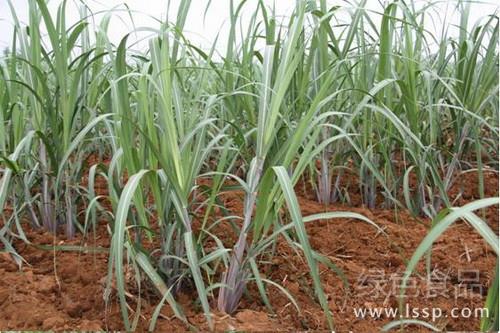
Winter-planted sugarcane
I. Cultivation techniques:
1. Field selection and land preparation:
Winter-planted sugarcane is planted in the low-temperature, dry season. To retain heat and moisture, the planting site must meet higher standards than for spring or autumn planting: choose a plot with irrigation available, no waterlogging, a sunny aspect, level terrain, and strong water-holding capacity. The soil should be fine and crumbly and the field surface level, with planting furrows about 30 cm deep and row spacing of 90-100 cm. Planting in paddy fields and on terraces provides good moisture retention.
2. Planting at the right time:
The planting time of winter sugarcane is closely related to the safe overwintering of the seed cane, sprouting, and the rate of seedling establishment. If planted too early, the sprouted buds that emerge from the soil are easily killed by frost, and buds that have not sprouted rot from prolonged exposure to low temperature and drought; if planted too late, the cane is also easily frozen and rots once frost occurs. Sugarcane can generally be planted from early November to late December, or from mid-to-late January.
3. Cutting seed cane and planting:
Winter sugarcane is planted during a period of low temperature and drought, which places high demands on the seed cane. When cutting seed cane, select healthy, disease-free stalks, generally with 2-3 buds per seed piece. Because sprouting takes a long time, diseases are more serious than in spring or autumn sugarcane, so after cutting it is best to dip the cut ends in lime powder for disinfection. When planting, make the furrow reach the soil layer, 30-35 cm deep, and level the furrow bottom to ensure planting quality. For winter sugarcane, the amount of seed cane should be appropriately increased, planting 6500-7500 double-bud seed pieces per mu to ensure the basic seedling population; after planting, the soil covering should not be too thick.
II. Field management:
Because winter-planted sugarcane is planted earlier, it also joints earlier, so all field management measures should center on the word "early," and topdressing must be done by mid-May. Before the tillering stage, apply fertilizer in time to promote early and abundant tillering and increase the rate of tillers that develop into stalks. Combine intertillage and weeding with earthing up, and apply stalk fertilizer during the main earthing-up. If the growth rate of the sugarcane declines in August and shows signs of nutrient deficiency, apply a tail-strengthening fertilizer. The young seedlings of winter-planted sugarcane are overwintering sites for borers and aphids, so control them early to eliminate overwintering pest sources and prevent the spread of insect damage.