Citrus leaves are linked to flower buds and spring shoots: how to protect the leaves in winter?
Citrus leaves are important organs for producing and storing organic matter. Winter is the key season for citrus leaves to accumulate nutrients, and it affects flower bud differentiation and the growth and development of the following year's spring shoots. The more leaves that overwinter, the more flowers there will be the next year, and the higher the fruit-setting rate will be. Therefore, protecting the leaves well in winter is an important issue in citrus production.
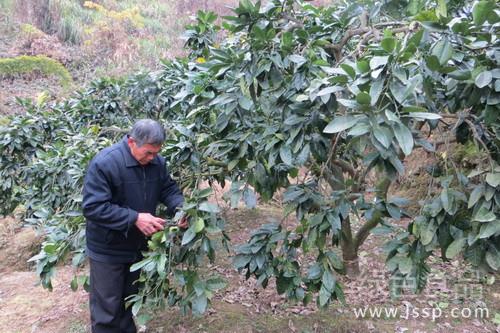
Measures for protecting citrus leaves in winter
1. Protect the root system:The citrus root system is sensitive to external conditions, and poor environmental conditions can easily damage the roots. Deep plowing and loosening the soil can provide effective protection, helping the tree grow well and keeping the tree vigorous, but the roots should not be cut too severely. It is best not to damage large roots of more than 1 cm, so as to avoid causing leaf drop.
2. Apply fertilizer scientifically:In winter, fertilizer should not be applied too concentratedly, and applying unrotted fertilizer should be avoided; fertilizer should be applied in combination with earthing up. After harvesting the fruit, a post-harvest fertilizer should be applied promptly. Because the citrus tree has gone through a year of flowering and fruiting, the tree's nutrients are heavily consumed. Applying fertilizer to supplement nutrients helps restore tree vigor, reduce winter leaf drop, and increase flower bud differentiation. Fertilization should be mainly organic fertilizer, with a small amount of nitrogen fertilizer added. Generally, apply 60-100 kg of farmyard manure per adult citrus tree. Depending on the situation, 0.25-0.3 kg of urea can be applied at the same time. If conditions permit, an appropriate amount of phosphorus and potassium fertilizer and some trace element fertilizer can also be applied. For the post-harvest winter fertilizer, it is best to apply it about 10 days before harvesting, and at the latest before the end of December. This fertilization can make the leaves dark green and glossy, enhance cold resistance, and prevent winter leaf drop.
3. Control moisture:Irrigate after fruit harvest and before spring shoots sprout, keeping the soil in a suitably dry state, which is beneficial for flower bud differentiation and will not cause leaf abscission. However, if it is excessively dry, the leaves will curl and even fall off. Therefore, if drought occurs, irrigate promptly. It is best to use a rapid irrigation and rapid drainage method, and avoid prolonged waterlogging, otherwise it will cause root rot and lead to leaf drop.
4. Prevent and control pests and diseases:Citrus leaves can be harmed by pests and diseases throughout the year. From December to March of the following year, the tree is dormant, which is the best period for pest control. Use an 80-fold dilution of petroleum oil emulsion to control mites and scale insects, remove moss and lichen, and it also has a special effect on sooty mold. Alternatively, in winter, spray a 3000-fold dilution of Miediejing to control overwintering-generation mites, and the effect is also very significant. If pesticides are chosen improperly, the dosage is too large, or the concentration is too high, it can also cause leaf drop.
5. Prune reasonably:Pruning can improve ventilation and light penetration in the citrus orchard. After fruit harvest or in early spring, you can prune out weak twigs without fruiting capacity, diseased and insect-damaged branches, and crossing branches inside the canopy, and shorten water sprouts, which helps protect the leaves in winter.
6. Foliar topdressing:In winter, use 0.5% urea solution plus 0.3% monopotassium phosphate solution, or 1% compound fruit fertilizer, plus 10-15 ppm 2,4-D, and spray once every 7-10 days, alternating them; for autumn shoots with abnormal greening, spray 0.1-0.2% ferrous sulfate plus an equal amount of lime. By spraying foliar fertilizer and plant hormones, the photosynthetic function of citrus leaves can be effectively enhanced and leaf drop reduced.