There are many causes of tomato flower and fruit drop in winter, so how can it be prevented effectively?
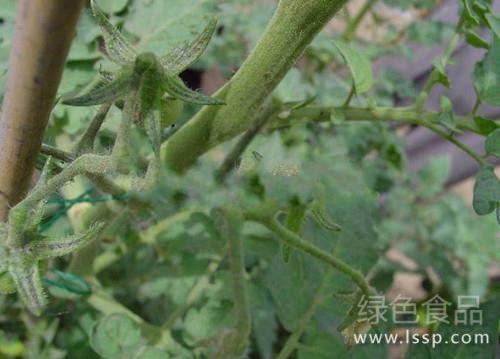
Tomato flower and fruit drop
1. Light causes:The suitable light duration for normal tomato growth is 12-16 hours, and the light intensity is 40,000-70,000 LX (lux). In winter and spring, the light intensity and duration are insufficient, and in the middle and lower reaches of the Yangtze River there are too many cloudy and rainy days in winter and spring. To keep warm, greenhouse covers are removed late and put on early, or even not removed all day, which affects tomato photosynthesis, causes poor pollen nutrition and poor pollination, and leads to flower and fruit drop.
Preventive measures: (1) Increase light exposure time as much as possible; (2) Use artificial supplemental lighting; a 40 W bulb can be hung every 3 m inside the greenhouse, with 1-2 hours of supplemental light in the morning and evening.
2. Temperature causes:Too low temperature, too high temperature and large sudden changes can all cause tomato flower and fruit drop. If tomatoes encounter temperatures below 13°C or above 30°C during the flowering period, pollination will be poor, leading to flower and fruit drop.
Preventive measures: Use ventilation or double-layer covering and other measures to prevent the greenhouse temperature from being too high or too low, try to avoid low-temperature or high-temperature environments, and shorten the duration of low or high temperatures. Note that the temperature difference during the flowering period should not change too much; generally, a day-night temperature difference of 8-10°C is good.
3. Malnutrition:Insufficient and uneven fertilization causes tomato nutrient deficiency, especially shortages of trace elements such as boron, magnesium and calcium, which easily cause flower and fruit drop. Too low CO2 concentration puts tomatoes in a state of photosynthetic starvation and also easily causes flower and fruit drop.
Preventive measures: Apply enough base fertilizer and apply it evenly; for topdressing, apply less each time but more frequently; during the flowering period, apply 2-3 foliar fertilizer treatments and apply some trace element fertilizers. Apply CO2 fertilization inside the greenhouse so that the CO2 concentration reaches 1000-1200 ml/L, which can effectively reduce flower and fruit drop.
4. Improper management:For example, improper fertilizer and water management, or tomatoes being weak or growing too vigorously, can all cause a low fruit-setting rate; mechanical damage to tomato plants and flowers can also cause flower and fruit drop.
Preventive measures: When carrying out field operations, do not damage the plants and flowers; secondly, strengthen fertilizer and water management to make the plants robust; also use plant growth regulators scientifically. If the plants are leggy, irrigate the soil with chlormequat at 250 mg/L, using 100-200 ml per plant, and effects will be seen within a week; to increase the fruit-setting rate, during the flowering period apply 10-20 mg/L of 2,4-D to the flower stalks.
5. Pests and diseases:When tomato plants suffer from pests and diseases, especially during the flowering period, physiological functions become disordered and flower and fruit drop occurs.
Preventive measures: Control pests and diseases in time. Try to avoid spraying during full bloom, reduce the use of water-based formulations, and use more smoke agents and dust formulations to avoid increasing the relative humidity inside the greenhouse and worsening flower and fruit drop. The pesticide concentration should be moderate.