Control methods for the three pests and one disease of mushrooms: mites, springtails, mushroom gnats, and harmful Mycogone perniciosa
The "three pests and one disease" harming mushrooms are: mites, springtails, mushroom gnats, and harmful Mycogone perniciosa. The symptoms and control methods for these pests and diseases are described below.
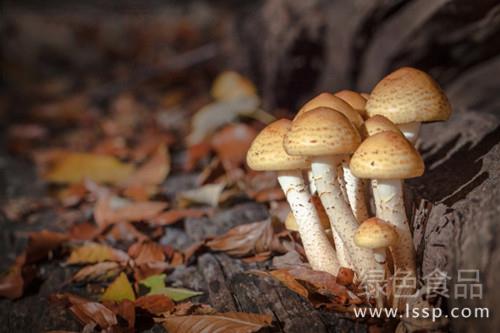
Mushroom pests and diseases
I. Mites:During the spawn-running process, if the mycelium shows signs of dieback, such as a decrease in fluffy mushroom mycelium and an increase in strand-like mycelium, with pinkish shiny spots on the mycelium surface, then mites are present in the mushroom bed. When 3 to 5 mites are seen within the field of view of a magnifying glass, the control threshold has been reached. After casing soil is applied, mites move toward the soil surface following mycelium growth, congregating to feed on primordia and the base of mushroom stipes, causing the mushroom roots to become bare with no mycorrhiza, so nutrients cannot be transported and the mushrooms die. At the same time, mites transmit pathogens and viruses; where mites are severe, various diseases are also severe.
II. Springtails:Springtails are omnivorous insects. Mushrooms grown in open fields and greenhouses have more springtails. Common species include the grayish-white angled springtail and the tiny black angled springtail. Springtails feed on both mycelium and mushroom fruiting bodies, often gathering in the gills or on the caps, gnawing at the fruiting bodies and causing them to shrivel and die. The black angled springtail in particular is very small in body size and has a high population density, easily causing devastating damage.
III. Mushroom gnats:Autumn, when temperatures gradually decrease, is suitable for the reproduction of mushroom gnats and mushroom gall midges. Especially in culture material rich in manure and incompletely fermented, mushroom gnats and mushroom gall midges occur in huge numbers, and their larvae feed on mycelium. This reduces yield, and if mushroom gnats break out with an excessively large population, they can also cause devastating damage.
IV. Harmful Mycogone perniciosa:When the mycelium is in the soil during the strand formation stage, the primordium differentiation stage, and the fruiting body growth stage, it can all be infected by harmful Mycogone perniciosa. After the fruiting body is damaged, it appears deformed, with an enlarged stipe, a shrunken cap, and attached white fluffy mycelium that later turns brown, with brown liquid or lesions. Once the fruiting bodies are damaged, both mushroom yield and quality suffer losses.
V. Integrated pest and disease control:
In the middle and late stages of spawn running, when the pest population density in the culture material reaches the control threshold, pesticides must be applied promptly, and pesticides with high efficacy and low toxicity that do no harm to mycelium or fruiting bodies should be chosen. If the mushroom house is in good condition and well sealed, aluminum phosphide fumigation can be used, at 3 tablets (9.9 grams) per cubic meter, sealed for 48 hours. Most mushroom houses or shed sites can only use spray application. Guchongjing is a biological pesticide specifically for edible fungi to kill insects and mites, with systemic and stomach poison action. When pest population density is high, spray at 500 times dilution; if pests occur during the casing soil stage, after casing, when heavily applying the mushroom-adjusting water, mix 1000 times Guchongjing into the water; for pests during the first flush growth stage, apply Guchongjing after the peak of the first flush. Before applying the pesticide, stop watering for 1 to 2 days depending on the mushroom house humidity, so that the pesticide can be absorbed more quickly to the depth of the mushroom bed and achieve the insecticidal effect.
When mushrooms infected by Mycogone perniciosa appear on the mushroom bed, stop watering for 2 to 3 days, keep the bed surface dry, promptly remove and burn the diseased mushrooms, and after this flush is over, immediately spray 1000 times Duogufeng fungicide, combined with water replenishment, spraying once every 3 days for 3 consecutive sprays, which can effectively control the spread of pathogens in the soil layer. At the same time, pay attention to controlling air humidity and strengthening ventilation.