If citrus huanglongbing is not treated in time, it can destroy an orchard. What are the control methods?
At present, citrus huanglongbing is occurring extensively in southern China and has severely damaged citrus yields, leaving many citrus growers at a loss. Once huanglongbing occurs, if it is not treated according to the symptoms, the only option is to dig out the entire tree and destroy the whole orchard. The experience in controlling citrus huanglongbing is introduced below.
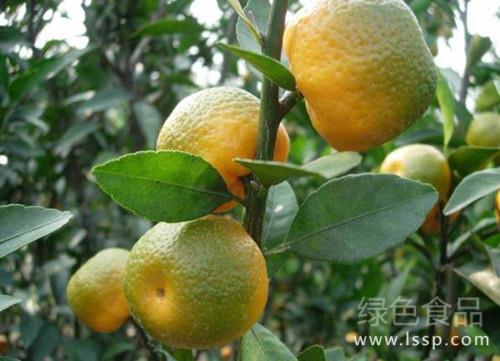
Citrus huanglongbing
1. Yellowing caused by water damage.Citrus roots are extremely intolerant of water. If they are soaked in water continuously for 48 hours, the capillary roots (citrus feeding roots) will rot. Therefore, it is suitable for soil with a water content of 60-80%. During continuous rainy days, the root hairs soaked in water are prone to oxygen deficiency, forming rotten roots. Especially in citrus orchards that have not been planted with deep pits and high ridges, the roots and root hairs are more likely to rot, causing the leaves to turn yellow. Therefore, the citrus orchard site should be where the groundwater level is relatively low, the soil is loose and drains well. When planting, deep pits and high ridges are required (more than 40cm above the ground level). For citrus trees that turn yellow after planting due to water damage, drainage around the orchard should be improved, and a ring-shaped ditch 40cm deep should be dug at the drip line outside the tree. Place miscellaneous branches and leaves at the bottom of the ditch, add an appropriate amount of grass and wood charcoal ash, then cover with soil, so that the roots have plenty of oxygen and organic matter, which helps restore tree vigor.
2. Yellowing caused by fertilizer damage.The root system of citrus trees, especially the capillary roots, is sensitive to high-concentration fertilizer. If the fertilizer concentration is too high and the ammonia gas is too strong, they will be burned. Therefore, when fertilizing, the fertilizer should be applied as much as possible at the outer line of the citrus tree's branches and leaves, and farmyard manure that has not been composted and thoroughly decomposed must not be used. Thoroughly decomposed farmyard manure should also be diluted when applied. The fertilizer concentration should preferably be 0.5-0.8. In summer, protect the root zone of citrus trees from direct sun exposure, and plant beneficial grass or cover with grass in the orchard to improve the vitality of the fruit tree roots.
3. Nutrient deficiency disorders.Because chemical fertilizers (compound fertilizers) mostly contain only 3 elements (namely nitrogen, phosphorus, and potassium, and some do not even contain potassium), while citrus trees also need 12 elements such as calcium, magnesium, sulfur, zinc, manganese, iron, copper, boron, and molybdenum. If a single compound fertilizer is applied for a long time, it will cause various disorders such as yellow leaves and dead branches. Therefore, fertilizers used for citrus trees must have comprehensive nutrient effects, such as slow-release high-quality fertilizers. It is better to compost peanut bran, soybean bran, and rapeseed bran with phosphate fertilizer and apply them mixed; fresh young branches and leaves and green grass used as base fertilizer are also excellent organic fertilizers. For quick-acting fertilizers, those with relatively comprehensive nutrition are better, such as imported high-potassium, calcium, and boron treasure fertilizers, and Israel's potassium nitrate. These new concentrated compound fertilizers contain more than 8 elements and can meet the various nutrients needed by citrus trees. Especially in autumn (September-October), this is the period when citrus trees need the most nutrients in a year. If nutrition is insufficient, it will lead to yellow leaves in winter, many deformed flowers in spring, and a large amount of flower drop at flowering, affecting the next year's yield.
4. Viral yellowing disease (huanglongbing).Characteristics of citrus trees with huanglongbing: leaves are small and pointed, hard, lusterless, and yellow, leaf veins are swollen, new branches are short and clustered, and there is no sap inside the bark of the branches. There is currently no specific drug for this disease, and only long-term prevention is possible: (1) Introduction of planting material: introduce virus-free seedlings from scientific research institutions. (2) Kill the Asian citrus psyllid and whitefly (the Asian citrus psyllid is the vector that spreads the huanglongbing virus). During the young shoot periods in spring, summer, and autumn, spray 2-3 times with tetracycline hydrochloride (each tablet mixed with 1.5-2.5 kg of water). (3) Protect the citrus tree root system, avoid water damage, fertilizer damage, and lack of nutrient elements, and improve tree resistance. (4) When citrus trees with huanglongbing are found, the entire tree must be dug out and burned.