How to prevent and control green-shoulder fruit in tomatoes when the skin turns green and the flesh becomes pithy
Tomato green-shoulder fruit, also known as rib-brown fruit, has the following symptoms: brown discoloration or green skin appears on part of the tomato skin, and individual tomatoes turn tea-brown, become hard or develop necrotic spots. When the diseased fruit is cut open, the flesh is seen to be "pithy", the vascular bundle tissue of the flesh is dark brown or brown, the tomato skin at the browned parts is often green or rust-colored, and the flesh hardens, with poor quality and no taste when eaten.
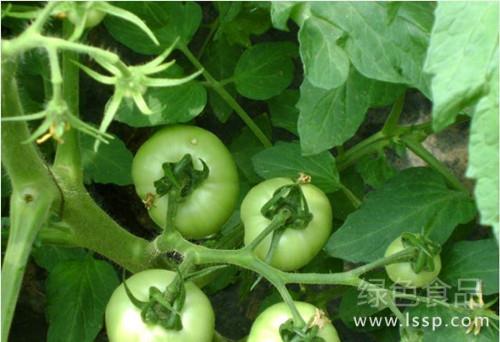
Tomato green-shoulder fruit
1. Causes of the disease: Tomato green-shoulder disease is a physiological disorder. The degree of damage depends on the tomato variety, sunshine duration and light intensity, and the ratio of nitrogen, phosphorus and potassium in the soil. It is especially prone to occur after consecutive cloudy days followed by sudden clearing. In addition, the physical and chemical properties of the soil and the degree of decomposition of applied human excrement and urine also affect the occurrence and damage of green-shoulder fruit. When light is insufficient, temperature is low, humidity is high, carbon dioxide is insufficient, and night temperature is on the high side, tomato green-shoulder fruit is likely to occur. When nutrients in the tomato plant are insufficient, nitrogen fertilizer is applied excessively, potassium fertilizer is insufficient, and especially when ammonium nitrogen is excessive, the ratio of carbohydrates to nitrogen decreases, causing abnormal tomato metabolism, leading to lignification of vascular bundles and inducing green-shoulder fruit. In addition, when soil humidity is too high and soil permeability is poor, root absorption is hindered, causing nutrient imbalance in the tomato plant and reduced iron absorption, so the disease is severe.
2. Solutions:
1. Select tomato varieties resistant to green-shoulder fruit: At present in production, medium-sized fruit with thin skin and varieties whose tomato plants do not have very large leaves are relatively resistant to the disease, while thick-skinned ones are susceptible.
2. Increase the application of organic fertilizer: Adopt formula fertilization technology, avoid using too much ammonium fertilizer, so as to adjust the ratio of nitrogen, phosphorus and potassium in the soil and promote the absorption and utilization of potassium by tomato plants.
3. When consecutive cloudy days are followed by sudden clearing, do not immediately remove all the straw curtains. First remove half, and when the ground temperature reaches 15°C, remove all of them. This method can prevent green-shoulder fruit.
4. Regularly spray tomatoes with potassium dihydrogen phosphate or other foliar fertilizers, etc., which can reduce green-shoulder fruit.
5. Other measures: Increase carbon dioxide application and use film with good light transmittance to enhance lighting, which can effectively reduce tomato green-shoulder fruit.