Proper winter management of sweet orange for a good canopy, less disease and pests, and no drop in yield the following year
The key to winter management of sweet orange trees is to form a good canopy for the trees, achieve a bumper harvest the following year, and reduce pests and diseases. Therefore, winter management of sweet orange orchards is very important.
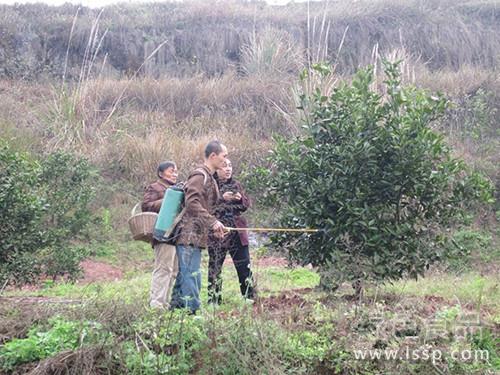
Sweet orange disease and pest control
I. Tree body management:1. Shaping and pruning: Be tree-oriented and respect "tree rights." For bearing trees, only prune dead and dry branches, severely diseased and pest-damaged branches (especially leaf-curled branches damaged by citrus leafminer), worthless crossing branches, old thorns, and short-cut the yellowing late autumn shoots that cannot turn color. This applies especially to blood oranges; the long, vigorously growing water sprouts emerging at the top should be partially short-cut. Bearing trees should be pruned appropriately after the sweet oranges are harvested. Be careful not to cut off the small fruiting twigs that will bear fruit the following year, and try to retain the middle and lower branches of the canopy. Aim for less pruning, light pruning, and more branch bending so that the branches are reasonably distributed, evenly branched, and form a natural open-center shape. 2. Flower promotion technique: From early November, spray a 0.6% urea solution (that is, 6 liang of urea mixed with 100 jin of water), continuing until February of the following year, for 4 consecutive months, once a month. This can effectively promote flower bud differentiation.
II. Fertilizer and water management:1. Water: For sweet orange trees planted more than three years ago and planned to bear fruit, where soil moisture is high, ditches should be opened for drainage to reduce soil moisture and promote flower bud differentiation and more fruit. 2. Fertilizer: From October to mid-February of the following year, stop applying chemical nitrogen fertilizer (urea, ammonium bicarbonate) to sweet orange seedlings to avoid yellowing of late autumn shoots and the breeding of pests and diseases. However, according to tree age, apply farmyard manure such as clear manure water and ash residue fertilizer as appropriate. Especially for orchards that have already borne fruit, apply a pre-harvest fertilizer mainly based on organic fertilizer once in mid-November, and combine it with irrigation to combat drought.
III. Disease and pest control: 1. Pesticide application for pest control: Apply pesticide before the end of October to control pests mainly including red and yellow spider mites, rust mites, and others, and thoroughly eliminate overwintering pest sources. From November to the end of January of the following year, use "lime sulfur mixture" crystals twice, at 3-4 liang each time (first dissolve with boiling water), mixed with 30 jin of water, and spray evenly on sweet orange seedlings. This can effectively kill pests such as red and yellow spider mites, rust mites, and scale insects. 2. Whitewashing tree trunks: This method can prevent freeze damage and also control many diseases and pests. Mix 1 jin of "lime sulfur mixture" crystals, 1 jin of table salt, 10 jin of quicklime, and 30 of clear water into a paste, and apply it to the bare lower parts such as the main trunk and main branches. 3. Killing "citrus longhorned beetles": Inspect the base of sweet orange trunks. If small holes are found with fresh insect frass, use an iron wire to remove the frass, then use an iron hook to catch and kill the insect, or use cotton dipped in "dimethoate" or "dichlorvos" and insert it into the bore hole, then seal the hole opening with yellow mud.
IV. Cold and freeze protection:Sweet orange is an evergreen fruit tree and is in a semi-dormant state in winter, with weak cold resistance. Therefore, doing a good job of winter cold and freeze protection for sweet oranges should not be underestimated. 1. Mulching: When severe cold arrives, use different mulching materials (such as rice straw, crop stalks, shade netting, thin waste plastic film, etc.) to cover the root area of the fruit trees, preventing nighttime ground temperature radiation and increasing the surface temperature at the root zone of sweet orange trees. 2. Mounding soil around the base: Mounding soil can thicken the soil layer, inhibit soil moisture evaporation, and raise soil temperature. The height of the mounded soil should not exceed the graft union. After the frost period the following spring, the mounded soil should be opened up to prevent rot of the root crown. 3. Pay attention to winter irrigation: Where irrigation conditions are available, irrigate promptly 3-5 days before a cold wave arrives. The water amount should be such that the water layer stored in the tree basin reaches 10-15 cm. Irrigation should be done at midday when the temperature is relatively high. The water should be irrigated thoroughly, drained immediately after irrigation, and timely intertillage should be carried out to prevent freezing after irrigation. 4. Smoke: Heavy frost easily causes sweet oranges to freeze, especially when temperature drops after freezing, which further intensifies freeze damage. Therefore, according to weather forecasts, the smoke method can be used to radiate and dissipate heat and reduce frost damage. For smoke materials, rice husks, wood shavings, fallen leaves, crop stalks, etc. can be selected, with 4-6 piles per mu, lit before low temperatures arrive. 5. Spraying anti-transpiration and moisture-retention agents: Before low temperatures arrive, spray anti-transpiration and heat-retention agents on the sweet orange canopy. This can inhibit leaf moisture evaporation, reduce heat loss, and provide a heat-preservation effect.