Grapes can be killed by frost in low temperatures; five key overwintering cold-protection measures you must master
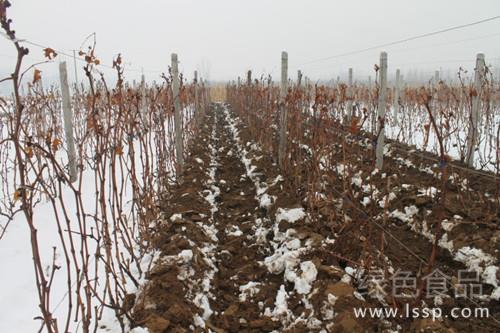
Burying grapes in soil for overwintering
1. Understand the cold resistance of grapevines.In winter, grapevines are mainly damaged by freezing at the roots, followed by the trunk and branches. When the soil temperature where the grape roots are located drops to minus 6°C, freezing injury of varying degrees occurs; when it drops to minus 8°C, all are killed by frost. Therefore, the grape root zone should be kept above minus 6°C in winter.
2. Irrigate with freezing water at the right time.In winter, 10 days before burying cold-protection soil, irrigate once with cold-protection water, in order to prevent freezing injury to grape roots and drought in early spring. When irrigating, be sure to irrigate thoroughly, with the soil reaching a saturated state as the standard. Wait until the surface soil is slightly dry, then proceed to bury soil for cold protection.
3. Take the vines down from the trellis in time and bury the first layer of cold-protection soil properly.In this early winter period, not only is the temperature low, but the wind is also relatively strong, and the water content of grape stems and branches is easily evaporated by the wind. After the grapes drop their leaves, prune them in time, then tie the canes well with straw rope or similar, and when the temperature remains stable at about 2°C for five consecutive days, cold-protection soil should be buried. The first soil burial should not be too much, with no exposed canes as the standard.
4. Bury the second layer of cold-protection soil at the right time.The second layer of cold-protection soil is ideally buried when the temperature drops to 0°C, that is, the second layer of cold-protection soil should be completely buried before freezing. In areas where the soil temperature at 80 cm below the surface drops to minus 2°C in winter, the cold-protection soil thickness is 20—30 cm, and for every 1°C drop in soil temperature, the soil burial thickness increases by 10 cm. As long as you follow this rule, freezing injury will not occur. To achieve a better cold-protection effect, when burying the second layer of cold-protection soil, corn stalks or grass should first be covered. This can significantly raise the temperature at the grape roots. The width of the cold-protection soil (bottom width) cannot be less than 1.2 m, and after burying, tap it lightly with a shovel. In addition, the thickness of the cold-protection soil is also related to the local soil quality.
5. Soil-taking locations and backfilling the soil-taking trenches.When digging cold-protection soil, be sure to take soil from the rows as far as possible from both sides of the main grape trunk, and do not get too close to the roots, so as to avoid cold air invading the grape roots from the soil-taking trench and causing freezing injury. Where irrigation conditions are available, after freezing, the soil-taking trench should be filled with water and frozen into ice, which can both prevent cold air intrusion, reduce the thickness of the frozen soil layer, and help the roots overwinter and prevent drought the following spring. Where irrigation conditions are not available, loose grass or similar materials can also be used to cover the soil-taking trench.