Poor drought resistance in wheat makes it prone to frost injury: a detailed explanation of the causes of frost damage and defense methods
The external cause of wheat frost damage is poor weather conditions, and the internal cause is its own poor cold resistance. According to the period and characteristics of wheat frost damage, it can be divided into 4 types.
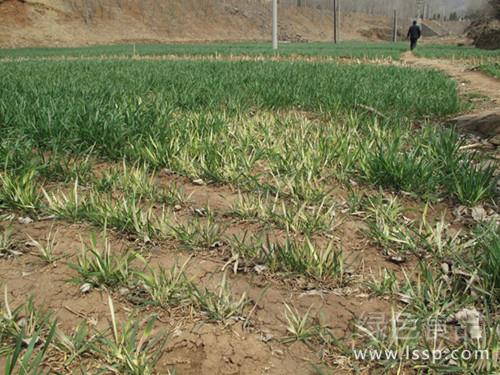
Wheat frost damage
Types of wheat frost damage: (1) Early overwintering period (early to mid-December), when wheat seedlings have not undergone cold-hardening and suddenly encounter weather with a sharp drop in temperature below -5°C, seedlings in fields with weak seedling quality, poor land preparation quality, large soil pores, and drought quickly wilt green. (2) Overwintering period (late December to early February of the following year), when strong cold waves or abnormal weather occur multiple times, causing alternating freezing and thawing. There are two situations: first, the aboveground part of wheat withers; second, when the temperature rises and the young ear growth point of wheat seedlings begins to sprout, cold resistance declines, and freezing injury is likely when temperature drops at this time. (3) Green-up to jointing stage (mid-February to early March), when wheat seedlings grow faster and cold resistance declines; if a cold wave occurs, seedlings are prone to freezing injury and death. (4) Jointing to heading stage (mid-March to early April), when wheat grows vigorously and has weak cold resistance; if the temperature drops suddenly, it is extremely prone to freezing injury, and some young ears on the main stem and large tillers are frozen to death.
Causes: (1) Climatic factors. High temperatures before winter cause excessive wheat seedling growth, and a sudden temperature drop during the overwintering period, with strong cooling and sustained low temperatures, causes wheat that has not undergone cold-hardening to freeze. (2) Variety factors. Wheat varieties with strong springness have poor cold resistance, increasing the risk of frost damage. (3) Sowing factors. The suitable sowing period for wheat in central Jiangsu is from the end of October to early November, but continuous rainy or continuous dry weather often occurs during this period, making it difficult to sow at the right time. If sowing is advanced, it will cause excessive early growth of wheat seedlings, and when frost damage occurs, the seedlings will be severely damaged. (4) Cultivation factors. To sow while preserving soil moisture, cultivation is extensive, wheat seeds fall deeper into the soil, emergence time is prolonged, and weak seedlings form; or clods are large and hard, which is not conducive to root penetration, making it difficult for wheat seedlings to absorb fertilizer and water, resulting in poor seedling quality, while cold air easily invades under the soil and freezes the root system; incomplete soil covering forms exposed-seed seedlings; shallow root penetration makes plants prone to frost damage; incomplete ditch systems and poor drainage make freezing more likely. (5) Fertility factors. At sowing, excessive fertilization causes excessive pre-winter growth of wheat seedlings, making frost damage likely; while in fields lacking fertilizer, wheat seedlings are yellow and thin, with poor cold resistance, and are prone to freezing when temperature drops sharply.
Defense measures: (1) Improve sowing quality. Select wheat varieties with good cold resistance; before sowing, apply 1500-2000 kg of decomposed organic fertilizer and 35-45 kg of 45% ternary compound fertilizer per mu; after deep plowing, prepare the land finely. Select seeds carefully, carry out seed sunning and germination tests, and treat seeds with chemicals. Sow at the right time according to variety characteristics, reasonably determine the sowing rate, sow at a depth of 3-4 cm, and ensure uniform depth.
(2) Strengthen field management. For fields that need irrigation after sowing, if the soil is compacted, cultivate and loosen the soil in time; after emergence, promptly move dense seedlings to fill sparse areas, clear the three ditches, and apply winter fertilizer according to seedling condition; before overwintering, press properly to close soil cracks and help preserve soil moisture. Irrigating in winter before a cold wave arrives can raise soil temperature, close soil cracks, promote more tillering, larger tillers, and strong seedlings. After winter irrigation and fertilization, cover the field with straw, which helps prevent wind, prevent freezing, preserve warmth, and preserve soil moisture.
(3) Prevent excessive pre-winter growth. For fields sown too early, press appropriately to inhibit the growth of the main stem and large tillers of wheat, and if necessary, spray growth regulators; for fields with too large a sowing rate, first thin the seedlings, then combine with watering and supplement with an appropriate amount of quick-acting nitrogen and phosphorus fertilizer; for fields with excessive fertilizer and water, at the 5-leaf stage of wheat seedlings, hoe 7 cm deep between rows to cut part of the secondary roots and control nutrient absorption.