How to prevent and control chive leaf blight? Find the cause and treat it accordingly
During the growing period, chives often develop dry, withered leaves. Farmers often spray insecticides to control it, but because the control is blind, the effect is poor. Chive leaf blight can be caused by late blight and gray mold, or by physiological disorders; spraying insecticides is undoubtedly "going south by driving the chariot north." For leaf blight caused by underground larvae such as onion flies and late-eye fungus gnats, spraying the aboveground parts targets the wrong place. Controlling chive leaf blight requires "treating the cause accordingly."
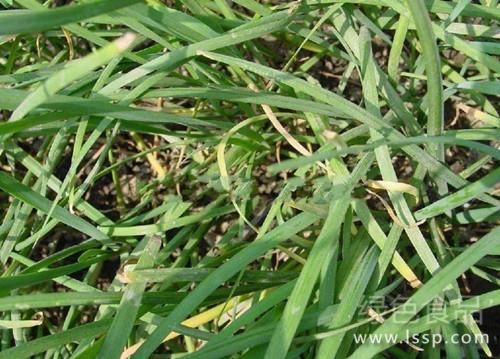
Chive leaf blight
Late blight leaf blight:Late blight is the main disease of chives in protected cultivation. Affected parts appear water-soaked; the diseased parts of leaves and flower stalks are dark green, while roots and bulbs are light brown, and the diseased areas have no obvious margin. When humid, the diseased parts bear sparse white mold; when dry, the diseased leaves wither and yellow. The roots and stems of infected chives become soft and rotted, so they cannot normally absorb water and nutrients, causing the aboveground parts to collapse or dry up. The occurrence of late blight is related to drainage. When controlling it, pay attention to drainage and reducing humidity and to crop rotation. In the early stage of disease, use 40-50 kg per mu of 25% metalaxyl 600-fold solution, or 58% metalaxyl mancozeb 500-fold solution, or 40% fosetyl-aluminum 200-300-fold solution, once every 7-10 days.
Gray mold leaf blight:When the disease occurs, it first develops from the leaf tip downward. In the early stage, there are white or light brown spots on both the front and back of the leaves. As the disease progresses, the spots expand into spindle or elliptical shapes, and finally the spots merge and the diseased leaves dry up. When humid, dense gray to gray-green mold layers form on the diseased leaves. For control, in addition to drainage and reducing humidity, use 50% procymidone 1000-1500-fold solution, sprayed once every 20 days, or 20% triadimefon 800-1000-fold solution, or 50% carbendazim 600-fold solution, sprayed twice after chive harvest and when seedlings are 5-8 cm tall.
Root maggot leaf blight:Root maggots are mainly onion flies and late-eye fungus gnats. Root maggots bore into chive bulbs to feed; a single clump often has a dozen or dozens of larvae. The infested bulbs are eaten hollow, causing rot, and the leaves yellow and wither until the plant dies. For control, you can sun-dry the roots, apply plant ash, or per mu use 2 kg of 5% phoxim granules mixed with fine soil, scatter it near the chive roots, and then cover with soil. During the larval damage period, when leaf tips are found beginning to yellow, soften, and lodge toward the ground, you can apply a drench for control. Use 75% phoxim emulsifiable concentrate 500-fold solution or 25% quinalphos emulsifiable concentrate 1000-fold solution; pull aside the surface soil around the roots, spray-drench the roots, and cover with soil at once. Spraying at 9-10 a.m. gives the best effect. During the adult emergence period (mid-to-late April, mid-June, mid-to-late July, mid-October), spray 10% imidacloprid (also known as Yibianjing, Kangfuduo, pirimicarb, Dagongchen, etc.) 2000-2500-fold solution, or 75% phoxim 1000-fold solution, or 2.5% deltamethrin 3000-fold solution; spraying at 9-10 a.m. gives a good effect. Adult late-eye fungus gnats like to rest in shaded, humid places with much decaying matter. Between summer and autumn, thinning leaves and improving ventilation can reduce their occurrence. They are attracted to light, so frequency-vibration insect-killing lamps can also be used to trap and kill them.
The phenomena of dry leaf tips, leaf blight, and dead plants in chives caused by physiological disorders are also related to soil acidification, ammonia toxicity, high temperature (above 35°C), and low temperature. Calcium deficiency, boron deficiency, and excess manganese can also cause yellowing of chive leaf tips, and can be treated according to the cause.