How to prevent and control pineapple heart rot? Be alert when the heart leaves turn brown, rot and smell foul
Pineapple heart rot often occurs in pineapple plantations not long after planting. Once this disease occurs, it spreads rapidly and causes relatively large losses. The occurrence and control of pineapple heart rot:
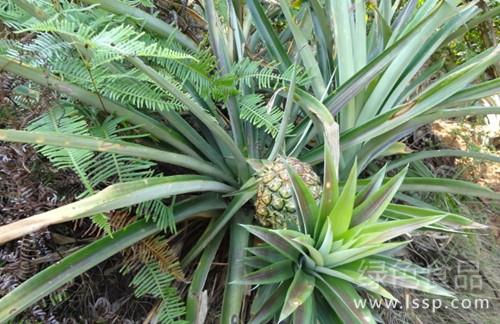
Pineapple heart rot
I. Symptoms:Pineapple heart rot mainly damages seedlings and mature plants. In the early stage of the affected plant, the leaves remain green, only slightly darker and lusterless, while the heart leaves are yellowish white and easy to pull out, making it hard to notice. Later, the leaf color of the diseased plant gradually fades to yellow or reddish yellow, the leaf tips turn brown and dry up, and the leaf bases rot and become light brown and water-soaked; the rotting tissue softens into a cheese-like consistency, and the junction between diseased and healthy parts is dark brown. Due to invasion by secondary bacteria, the rotting surface gives off a foul odor, and the whole plant dies.
II. Pathogen:Regarding the pathogen of heart rot, it is generally considered that there are three types, including two pathogenic fungi, namely Phytophthora and Pythium, and one pathogenic bacterium, namely Erwinia.
III. Infection cycle:The two pathogenic fungi can overwinter in the soil, while the pathogenic bacterium can be transmitted by insect vectors. The pathogen invades through the young and tender part at the junction of the pineapple root and stem (the root crown area), causing disease. The pathogen spreads through rain splash and causes repeated infection, allowing the disease to spread.
IV. Conditions for occurrence and epidemic:1. In hot, rainy seasons, especially when heavy rain occurs after autumn planting, the disease tends to be more severe. 2. Pineapple plantations with heavy clay soil, poor drainage, or susceptibility to waterlogging are more severely affected.
V. Control methods:
1. In rainy seasons, especially when there is heavy rain shortly after planting, this disease occurs severely, so before planting, strong seedlings must be selected and allowed to go through a certain drying period before planting. Pay attention to drainage and avoid planting in low-lying, wet places.
2. In diseased areas, before planting, the seedlings must be treated. First peel off several leaves from the base of the seedlings, then soak the base of the seedlings in a 25% carbendazim wettable powder solution diluted 800 to 1000 times for 10—15 minutes. After draining upside down until dry, proceed with planting.
3. Avoid injuring the leaf bases, and be careful during intertillage and weeding.
4. Fertilize reasonably, and do not apply nitrogen fertilizer in a one-sided or excessive manner.
5. When the disease begins, spray with a 50% carbendazim wettable powder solution diluted 1000—1500 times, or with a 70% thiophanate-methyl solution diluted 1000—500 times, or with a 50% benomyl wettable powder solution diluted 1500 times (the spray volume per mu is about 125 kg) to prevent the disease from spreading. Diseased pineapple seedlings should be pulled out and burned promptly. The soil in the diseased planting holes should be removed, replaced with new soil, then spread with lime for disinfection, and finally replanted with healthy seedlings.