What is gibberellin and how should it be used correctly?
What is gibberellin? How is gibberellin used? Is there any knowledgeable netizen who can help explain? Gibberellin is a broad-spectrum plant growth regulator that can promote crop cell elongation, leaf enlargement, parthenocarpy (seedlessness), and fruit growth. Gibberellin can break seed dormancy, change the ratio of female to male flowers in crops...
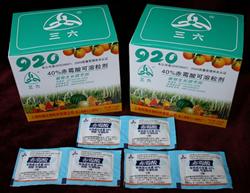 What is gibberellin? How is gibberellin used? Is there any knowledgeable netizen who can help explain?
Gibberellin is a broad-spectrum plant growth regulator that can promote crop cell elongation, leaf enlargement, parthenocarpy (seedlessness), and fruit growth. Gibberellin can break seed dormancy, change the ratio of female to male flowers in crops, affect crop flowering time, and reduce the shedding of crop flowers and fruits. Therefore, Zhongdi Network has compiled the methods of using gibberellin on common crops and the crops involved, listed in detail below for netizens' reference.
The role of gibberellin on rice:Because hybrid rice seed production suffers from serious panicle enclosure and mismatched flowering periods between the parents, which is unfavorable for cross-pollination in rice, thereby reducing the seed-setting rate and affecting seed production yield, but using gibberellin can effectively solve these problems.
Methods of using gibberellin on rice:Use 10-15 grams of gibberellin per mu of rice, applied in two sprays. The first spray is when 10% of the rice has headed, using 2-3 grams per mu diluted in water; the second spray is on the next day, using 4-6 grams per mu diluted in water; the third spray is on the day after the second, using 4-6 grams of gibberellin per mu diluted in water.
Spraying gibberellin on fruit trees can increase the fruit-setting rate. The methods are as follows.
Methods of applying gibberellin to citrus trees:After the citrus tree flowers fade, spray the entire tree with 50 grams of gibberellin diluted in 1000 kg of water; after 20 days, spray again with gibberellin at the same concentration, which can reduce physiological fruit drop of citrus trees. (When spraying, note that the concentration must not be too high, otherwise it will affect citrus color development and fruit quality.)
Methods of applying gibberellin to jujube trees:In the early full-bloom stage of jujube trees, use 10-15 grams of gibberellin diluted in 1000 kg of water to spray the canopy of jujube trees.
Spraying gibberellin on vegetable crops can promote vegetative growth, increase yield, and bring them to market earlier.
Methods of using gibberellin on celery:15 days and 30 days before celery harvest, spray twice with 20 grams of gibberellin diluted in 1000 kg of water.
Methods of using gibberellin on celtuce:When celtuce has grown to 13-14 leaves, spray with 10-20 grams of gibberellin diluted in 1000 kg of water.
Methods of using gibberellin on Chinese chives:2 to 3 days after harvesting Chinese chives, spray with 10-20 grams of gibberellin diluted in 1000 kg of water.
Gibberellin can break potato dormancy. The method is:Cut seed potatoes into pieces and soak them in a solution of 0.5-4 grams of gibberellin diluted in 1000 kg of water for 10-15 minutes. If the potato variety has a short dormancy period, use a lower gibberellin concentration; after soaking, remove the seed potatoes and place them in a cool place to dry. Do not expose them to direct sunlight. After that, they can be sown; soaking with gibberellin can promote seed potato sprouting, making them emerge early and uniformly.
Methods of using gibberellin on strawberries:In the early bud stage of strawberries, spray with 10 grams of gibberellin diluted in 1000 kg of water, which can prevent strawberry dormancy and promote strawberry flowering and fruiting.
Precautions for using gibberellin:
1. Because gibberellin powder does not dissolve in water, it needs to be dissolved with a small amount of ethanol or alcohol before use.
2. Gibberellin can be mixed with acidic pesticides, but must not be mixed with alkaline pesticides.
3. The prepared (dissolved) gibberellin solution should not be left for too long, to avoid affecting its efficacy.
4. Gibberellin must not be heated; once the temperature exceeds 60 degrees, it loses its efficacy.
5. Gibberellin has very strong physiological activity, and the concentration used is generally low, so when using it, the concentration and liquid volume must be strictly controlled.
6. After crops are treated with gibberellin, a short-term "chlorosis" phenomenon may appear, so after using gibberellin, fertilizer and water management should be strengthened.
What should be noted when using regulators?
What is a cutworm?