What to Do About Deformed Cucumbers? Causes and Prevention of Deformity from Prolonged Overcast and Rainy Weather and Insufficient Light
Causes of deformed cucumbers: insufficient light, high nighttime temperatures, a small day-night temperature difference, and irregular watering that fluctuates between too much and too little, which easily produces waist-pinched cucumbers. Excessive vegetative growth disrupts the balance of vine growth or leaves the vines diseased, often producing curved cucumbers. During the cucumber growing period, insufficient nutrition and weak growth vigor, or damage from pests and diseases such as aphids and downy mildew, easily produce pointed-tip cucumbers.
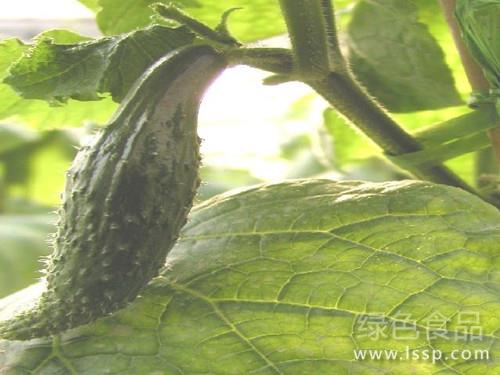
Deformed cucumbers
During the cucumber growing period, high temperatures, abundant moisture, vigorous growth and fast fruit elongation, or low temperatures, prolonged overcast and rainy weather, and low soil temperatures during the flowering period, cause poor pollination: the pollinated tip swells first, nutrition or moisture is insufficient, or the ovules develop unevenly, so that many seeds form at the top of the fruit, making that part thick, while the middle and lower parts have few or no seeds and grow thin, resulting in a big-bellied cucumber. When cucumbers encounter low temperatures during flower bud differentiation, they often form double ovaries or 4-carpel ovaries, which easily grow into short, small deformed “cucumber balls”. Because excessive nitrogen fertilizer or insufficient phosphorus and potassium fertilizer is applied in production, especially a sudden excessive application of nitrogen fertilizer, the cucumbers grow leggy and set fruit unevenly, and cucumbers set on side branches and weak branches tend to be bitter. In addition, in low-temperature, low-light weather, especially on prolonged overcast days, the cucumber roots absorb less water and nutrients and the fruits grow slowly, often accumulating more bitter compounds in the roots and lower fruits, resulting in bitter cucumbers.
Prevention measures: 1. Control temperature. During the cucumber seedling stage, especially before 2 true leaves, the day-night temperature difference should be larger, and the nighttime temperature should not be lower than 12°C, so as to avoid forming deformed ovaries and growing deformed cucumbers. During the cucumber fruiting stage, the day-night temperature difference also needs to be larger; during the fruiting stage, the daytime temperature should not exceed 30°C, the nighttime temperature should be 16°C—18°C in the first half of the night and 13°C—15°C in the second half, and ventilation should be strengthened to prevent temperatures above 30°C, ensuring normal pollination and fertilization so that the cucumbers grow evenly in thickness.
2. Fertilize reasonably. Apply sufficient basal fertilizer and increase the application of organic fertilizer and phosphorus and potassium fertilizer. For topdressing, adopt the method of small amounts applied many times; after harvesting cucumbers, apply the first topdressing, then apply topdressing once every 10 days, strictly control the amount of nitrogen fertilizer, and use formula fertilization technology; when fertilizing, keep the nitrogen, phosphorus and potassium ratio at 5:2:6 to prevent leggy growth. In the middle and late stages, spray 0.2% monopotassium phosphate solution on the leaves to prevent premature senescence of the plants.
3. Water reasonably. During the cucumber growing period, especially during the fruiting stage, do not assume that because cucumbers like fertilizer and water you should apply heavy topdressing and irrigation, causing “vine running”, and even less should you let the soil dry out suddenly or become waterlogged suddenly. On sunny days, pay attention to watering to prevent water shortage. Watering should be controlled in amount, especially during the cucumber swelling stage, where excessive watering must be avoided.
4. Strengthen pest and disease control. For diseases such as cucumber downy mildew, phytophthora blight and gray mold, observe frequently from the early growth stage of cucumbers; when central diseased plants are found, remove them promptly and bury diseased leaves deeply to prevent the spread of infection. Spray-control can be done with 10% Kejia suspension concentrate at 1000—1500 times dilution, 64% Sandofan wettable powder at 400—500 times dilution, or 72.2% Previcur water agent at 600—700 times dilution, spraying once every 7—10 days for 3—4 consecutive applications.
Disease control can also use the smoke agent method, which does not increase humidity inside the greenhouse: use 250 grams of 45% chlorothalonil smoke agent per mu, place it in portions inside the greenhouse, and in the evening light them one by one from the inside outward; after smoke is produced, close the greenhouse for fumigation, generally applying once every 7—10 days for 2—3 consecutive applications. For aphids and whiteflies, 10% imidacloprid wettable powder can be selected for spraying.