Greenhouse Vegetable Freeze Damage Prevention and Control Methods: Coping with This Winter's Many Overcast and Rainy Days
Recently, affected by cold air, widespread and sustained freezing rain and snow have occurred in the north, seriously affecting vegetable production, especially greenhouse vegetable seedling raising. To do a good job in greenhouse vegetable freeze prevention, the following measures can be adopted to ensure vegetables safely overwinter.
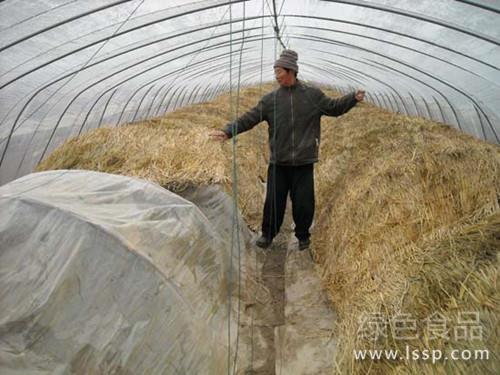
Greenhouse Vegetables Covered for Freeze Prevention
I. Strengthen Covering:
Inside the vegetable greenhouse, set up small arch tunnels, using thin bamboo poles and the like as arch frames, cover with film at night, and cover the film with straw mats; covering the ground inside the greenhouse with plastic film can increase temperature and preserve moisture. Using plastic film as a skirt around the bottom of the greenhouse can significantly reduce cold air invasion from the bottom; at the same time, plug all gaps to minimize heat loss. On the north side of the greenhouse, pile straw stalks into a windbreak to block wind and prevent cold.
II. Temporary Heating:
When the daytime temperature inside the greenhouse is below 15°C and the nighttime temperature is below 5°C, freeze and chilling damage may occur. Temporary heating measures can be taken at night to artificially supplement heat energy. Placing several coal ball stoves inside the greenhouse can raise the temperature inside. However, attention must be paid to preventing carbon dioxide poisoning; when adding coal balls and removing the stoves, the greenhouse should be ventilated first before people enter.
III. Strengthen Fertilizer and Water Management:
Irrigating inside the greenhouse to increase soil and air humidity inside can have a certain cold-prevention effect; after irrigation, vegetables will not suffer freeze damage at -4°C. Mix rice vinegar, white sugar and superphosphate into a 300-fold solution and spray it on the leaves to increase the sugar content and hardness of the leaf mesophyll and improve cold resistance. Pouring dilute manure water inside the greenhouse makes the soil less likely to freeze, achieving the purpose of protecting seedlings and preventing cold.
IV. Strengthen Disease Control:
After vegetables are frozen, they are susceptible to pest and disease invasion, so fungicides such as chlorothalonil should be sprayed in time to control pests and diseases. Spreading plant ash is equivalent to covering vegetables with a quilt and can play a role in freeze prevention and disease prevention. At the same time, place fumigants inside the greenhouse and burn them to kill pathogens inside.
V. Management of Frozen Vegetables:
1. Irrigation for heat preservation: Irrigation can increase the soil heat capacity inside the greenhouse, prevent ground temperature from dropping, stabilize temperature, help air temperature rise steadily, and enable the frozen tissues of vegetables to recover their functions.
2. Ventilation for cooling: After greenhouse vegetables are frozen, the greenhouse cannot be closed immediately; only ventilation for cooling can be carried out, so that the temperature inside the greenhouse rises slowly, avoiding a sharp rise in temperature that causes necrosis of the frozen tissues of vegetables.
3. Artificial water spraying: Spraying water can increase the air temperature inside the greenhouse, stabilize the greenhouse temperature, and can inhibit the evaporation of water escaping from the frozen tissues of vegetables, promoting tissue water absorption.
4. Prune dead branches: Timely prune frozen branches and leaves to prevent the frozen tissues from becoming moldy and causing disease.
5. Set up shading in the greenhouse: Build a shade structure inside the greenhouse to prevent direct sunlight on frozen vegetables, so as to avoid tissue dehydration and shrinkage that causes loss of vitality.
6. Supplementary fertilization: After the frozen tissues have revived, timely apply quick-acting fertilizer. A 2% urea solution and a 0.2% monopotassium phosphate solution can be sprayed on the leaves.
7. Use hormones: After freezing, vegetables grow slowly and new branches and leaves are slow to emerge; exogenous plant hormones can be sprayed to promote growth and accelerate body recovery.