Eggplant planting coincides with the cold season: key management points during the transplant recovery period in the greenhouse
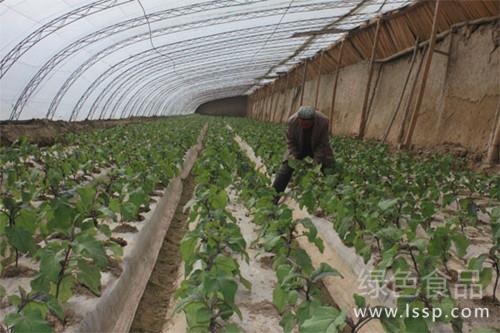
Greenhouse eggplant management
1. Temperature and humidity regulation.The recovery period after transplanting eggplant coincides with the cold season, so priority should be given to raising the greenhouse temperature. Maintain 28—30°C during the day and 15—20°C at night to promote early recovery. After recovery, maintain the greenhouse temperature at 26—28°C during the day; ventilate when it exceeds 30°C, and close the vents when it drops to 25°C. At night the greenhouse temperature should not be lower than 12°C, generally kept at 13—14°C, with 15—17°C being best. Add or remove straw mats and plastic film according to the weather. Indoor humidity of 70—80% and soil moisture content of 15—18% are suitable. When the greenhouse is dry, eggplant grows slowly; when humidity is too high, diseases spread easily.
2. Light regulation.Eggplant greenhouses generally use polyethylene drip-free film. To improve the light transmittance of the greenhouse film, mix 100 grams of flour with 15 kg of water and spray it on the inside of the greenhouse film with a sprayer, once a week, to reduce condensation on the film and increase light intensity.
3. Fertilizer and water management.When the first fruit begins to swell and reaches the size of an egg, close the greenhouse and water; give the first watering on a sunny morning, preferably filling the small furrow, and be careful to raise the temperature and remove moisture; give the second watering half a month later. Starting from the second watering, apply fertilizer with water according to the growth of the eggplant. Along with watering, apply 15 kg of diammonium phosphate, 10 kg of urea, 0.5 kg of boron-magnesium fertilizer, 1 kg of monopotassium phosphate, and about 100 kg of decomposed chicken manure each time.
4. Plant adjustment.For eggplant cultivation in a winter-warm greenhouse, use the hanging-vine method (two hanging strings per plant) with the two-branch pruning method, keeping the main branch and one stronger side branch at the first leaf axil below the first inflorescence, and removing the other side branches. In the middle fruiting stage, after the eggplant rows close in, promptly remove the lower old and yellow leaves and take them out of the greenhouse to bury deeply. Keep one fruit per inflorescence and remove the remaining flower buds. The two branches of each plant grow side by side, and side shoots should be removed promptly.
5. Applying 2,4—D to preserve flowers and fruit.To increase the fruit-setting rate of greenhouse eggplant, 2,4—D is generally used to treat the flowers. The application time is when the eggplant flower is in bud or has just opened; if treated today, it will bloom tomorrow. The concentration used is 20—30 ppm; when the temperature is low, use a higher concentration; when the temperature is high, reduce the concentration. Be careful not to splash the 2,4—D solution onto the leaves or stems to avoid phytotoxicity, and do not use too high a concentration to prevent fruit cracking.