Spring control methods for jujube witches' broom disease: watch out for dense clusters of branches that do not fall off easily
In recent years, jujube witches' broom disease has shown a worsening trend. Each spring, after jujube trees sprout, the symptoms of jujube witches' broom disease gradually appear on infected trees, and timely control is necessary.
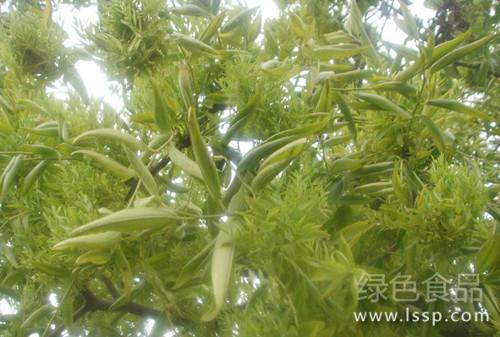
Jujube witches' broom disease
1. Symptoms: After a jujube tree is infected, the flower stalks lengthen to 3-6 times that of normal flowers; the sepals, petals, and stamens and pistils become small light green leaves; slender, short branchlets emerge from the leaf axils of the small leaves, forming branch clusters; vegetative branches sprout multiple times in one year, continuously producing fine yellow-green branches and leaves that form dense branch clusters which do not fall off easily in winter; a large number of latent buds on the trunk and branches of the whole tree sprout, producing yellow-green fine branch clusters; and small-leaved cluster-branched root suckers emerge beneath the tree.
2. Pathogen and transmission routes:
Phytoplasma is the pathogen of jujube witches' broom disease. It belongs to the non-helical mycoplasma-like organisms and is a microorganism between viruses and bacteria. Jujube trees infected with jujube witches' broom disease are the primary infection source of the disease. The pathogen survives in living diseased trees and is transmitted through division propagation, grafting propagation, and leafhoppers. Experiments have proven that sap rubbing inoculation, pollen from diseased plants, seeds, soil in diseased orchards, and contact between the root systems of diseased and healthy trees do not transmit jujube witches' broom disease.
The Chinese rhombic-marked leafhopper (Hishimonus sellatus), the concave-margined rhombic-marked leafhopper, and the red-flashed small leafhopper are the main disease-transmitting pests of jujube witches' broom disease. Leafhopper host plants include: jujube trees, wild jujube, pine and cypress trees, elm trees, mulberry trees, soybean, sesame, mung bean, Humulus scandens, and other plants. The above three leafhoppers are commonly distributed in northern jujube-producing areas and are all omnivorous pests that breed in large numbers in thickets of weeds. Therefore, in jujube orchards near hillsides, with overgrown weeds, or adjacent to pines and cypresses, jujube witches' broom disease occurs far more severely than in jujube orchards located on flat plains and managed cleanly.
3. Damage and control measures:
Jujube witches' broom disease is a devastating disease. Jujube witches' broom disease generally shows symptoms first on some branches and root suckers, and then spreads to the whole tree. After young trees are infected, they generally die within 1-2 years; when large trees are infected, they gradually die within 3-6 years. Jujube witches' broom disease causes serious damage, but it can be prevented and treated. Control measures:
1. Promptly saw off diseased branches and remove diseased plants: Saw off diseased witches' broom branches as early as possible to reduce infection sources and cure or delay the onset of the disease. Remove diseased trees including the roots and replant healthy seedlings in the same spot.
2. Select disease-resistant rootstocks and varieties and strengthen jujube orchard management: Use disease-resistant jujube varieties as rootstocks, such as Gaga jujube, Maya jujube, Beijing white jujube, etc. Strengthen fertilizer and water management in jujube orchards, remove weeds, promote healthy growth of jujube trees, and improve disease resistance.
3. Drug treatment for recovery: Use low-toxicity, high-efficiency compound drugs with the dual effects of killing the pathogen and supplementing nutrition, "Qufeng No. 1" and "Qufeng No. 2", for infusion treatment.
4. Control disease-transmitting leafhoppers: Overgrown weeds in jujube orchards, or intercropping with sesame, wheat, and corn, or planting pines, cypresses, mulberries, and pagoda trees, allow leafhoppers to reproduce and overwinter. From early May to mid-to-late August, spray insecticides to kill leafhoppers and reduce the spread of the pathogen.