Strawberry prices soar as the New Year approaches: how can we promote early ripening and high-quality production in strawberries?
Strawberries are very demanding about their environment. When conditions are suitable, they can grow indefinitely; when conditions are unfavorable, they can quickly go dormant. For example, if the soil is dry and lacking fertilizer, the temperature is too low, the seedlings are thin and small, or the growth is excessively vigorous, flower buds will be difficult to form or will form late, affecting the ripening period, yield and quality. Only by optimizing the environment and improving cultivation methods can strawberries be promoted to ripen early and produce high and excellent yields.
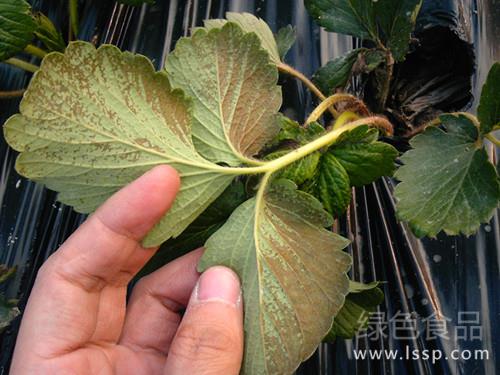
Remove old strawberry leaves
First, apply sufficient basal fertilizer and topdress according to the seedlings' condition.Generally, apply 4000 kg of decomposed farmyard manure per mu, or 100 kg of biological organic compound fertilizer, or 20-25 kg of high-analysis inorganic compound fertilizer as basal fertilizer. For well-growing strawberry seedlings, generally only phosphorus and potassium fertilizers are topdressed, that is, spraying 0.2% monopotassium phosphate 2-3 times. For those with poor growth, during the full fruiting period, apply 15-20 kg of compound fertilizer or 10 kg of urea in bands or holes. At the same time, spraying Huimanfeng active liquid fertilizer is recommended, 100 ml per mu diluted in 50 kg of clean water, sprayed 2-3 times. If topdressing with diluted human waste, first prevent environmental pollution, and second prevent the fresh fruit from rotting.
Second, regulate temperature and control humidity to break dormancy.The most suitable temperature for strawberries during the flowering period is 10-20°C. Below 10°C or above 35°C at noon on a sunny day, fertilization is poor and deformed fruits form. A greenhouse temperature below 35°C is the critical dormancy temperature. At -1°C, the plants are damaged by cold and the pistils are harmed. Strawberries tolerate flooding but not waterlogging, and the most suitable relative humidity is 60-70%, that is, the soil moisture content is 80% of the field maximum water-holding capacity. To this end, first, implement three-film covering, namely plastic film, greenhouse film, plus small tunnel film. Second, in high temperatures, open the side greenhouse film for ventilation on sunny days, and open both ends of the greenhouse film for ventilation on cloudy and rainy days. Third, during continuous high temperature and drought, use small furrow irrigation for moisture management, so that strawberries can carry out flower bud differentiation early and effectively under normal temperature and humidity conditions.
ThirdThird, assist pollination and control plant and fruit set.Strawberries mainly rely on self-pollination, but poor fertilization will produce deformed fruits or small fruits with poor ripeness. To achieve large fruits and good quality, first, carry out artificial pollination every day from 10 a.m. to 3 p.m. during the flowering period. Second, place a box of bees in each greenhouse to assist pollination. Third, control a certain fruit set, generally leaving only about 20 fruits per plant, and excess young buds and small fruits should be thinned regularly. Fourth, control and retain branch plants, leaving only 2-3 newly propagated seedlings per plant.
Fourth, regularly remove old leaves and prevent diseases and pests.During the growth of strawberries, there are always old, damaged, and pest-damaged leaves. Common diseases include viral disease, gray mold, leaf spot, powdery mildew, etc., and pests include aphids, red spiders, etc. Prevention methods: first, control temperature and humidity and prevent excessive growth of strawberry seedlings. Second, remove leaves damaged by diseases and pests whenever they are seen. Third, chemically prevent and control diseases and pests. For pests, options include lime sulfur mixture, Wanchongling, quick-acting sulfur phosphorus, etc. For diseases, options include Duoyangqing, PuK crop sterilization and repair liquid, Shileshi, etc.