Causes of Red Leaves Stunting Rapeseed Growth and Targeted Control Methods
Once red leaves appear in rapeseed, the green leaf area decreases, photosynthesis declines, growth stalls, and the plants grow poorly. Many factors can cause red leaves in rapeseed, so the cause must be identified before targeted remedial measures are taken.
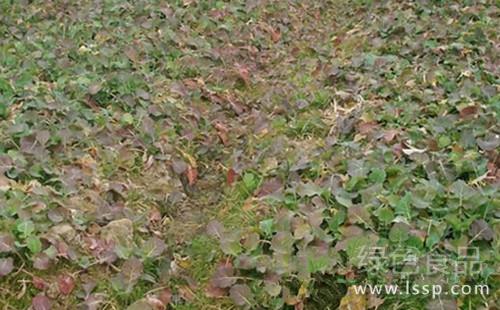
Rapeseed Red Leaves
1. Waterlogging: Severe waterlogging causes poor root growth in rapeseed, weakened absorption, nutrient imbalance, and blocked chlorophyll formation, while anthocyanins increase, resulting in red leaves. Remedial measures: Immediately clear the ditches and drain the waterlogging, lower the groundwater level, and improve soil permeability to encourage rapeseed to grow new roots early.
2. Soil drought: Soil drought and insufficient water cause leaf margins to shrivel and leaves to turn red. Remedial measures: Water promptly and drench the root zone with diluted fertilizer water to meet the rapeseed's water and nutrient needs.
3. Soil compaction: Soil compaction affects soil permeability and reduces the root absorption capacity of rapeseed, causing leaves to turn red. Remedial measures: Carry out timely deep intertillage to release soil moisture and improve aeration, and apply 10 kg of urea per mu to promote growth.
4. Poor, thin soil: Poor, thin soil leads to stunted development, slow growth, and red leaves in rapeseed. Remedial measures: Apply topdressing early, with 10-15 kg of urea per mu, plus about 15 kg of phosphate fertilizer.
5. Phosphorus deficiency at the seedling stage: Leaves emerge slowly, stand upright, and the middle and lower leaves are dark green, while petioles and veins are purplish red. For phosphorus deficiency at the rapeseed seedling stage, foliar spraying can be used. The specific method is: spray a 1%-2% superphosphate extract once every week, generally 1-2 times, using 40-50 kg of solution per mu each time.
6. Dense seedlings: When the population is too large, the seedlings crowd each other and individual plants become weak, leading to competition for fertilizer, water, and light, so the leaves turn yellow and red. For these red-leaf seedlings, thin them immediately and apply quick-acting fertilizer in time.
7. Aphid damage: Leaves are pale red and thin. Use 50 g of 40% dimethoate emulsifiable concentrate mixed with 50-60 kg of water, or 50-60 g of 80% dichlorvos emulsifiable concentrate mixed with 60 kg of water, and spray to kill the pests.
8. Low-temperature freeze injury: After rapeseed is hit by low temperatures, root absorption weakens, causing physiological nutrient deficiency; large amounts of anthocyanins form in the leaves, and the leaves turn purplish red. Remedial measures: Apply more phosphorus and potassium fertilizer, and combine this with clearing ditches and hilling soil around the roots to improve the microclimate for winter growth of rapeseed and enhance its low-temperature tolerance.