Tomato nutrient deficiency symptoms affect yield, so the remedy methods must be mastered
The development of tomatoes requires the absorption of various nutrients. When a certain element is lacking, corresponding deficiency symptoms will appear in the external morphology of the tomato, affecting tomato quality. Below is a brief introduction to the main deficiency symptoms of tomatoes and the remedy methods.
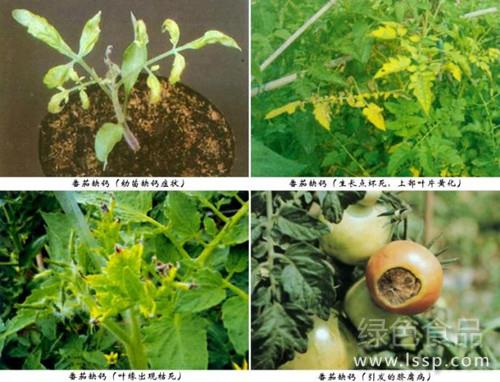
Tomato nutrient deficiency
Nitrogen deficiency: slow growth; in the early stage, old leaves turn yellow-green; later, the whole plant turns light green, with small, upright leaves. Leaf veins change from yellow-green to dark purple. Stems become hard, and tomatoes become smaller. Remedy method: mix ammonium bicarbonate or urea into 10-15 times the volume of decomposed organic fertilizer, apply it on both sides of the tomato plants, then cover with soil and water; alternatively, spray a 0.2% ammonium bicarbonate solution on the leaves.
Phosphorus deficiency: in the early stage, the underside of leaves turns purplish red; leaves develop brown spots, become stiff, and leaf tips turn black-brown and die. Leaf veins gradually turn purplish red. Stems are slender and rich in fiber. Fruiting is delayed. Remedy method: apply sufficient phosphate fertilizer during the seedling and transplanting stages; alternatively, spray a 0.2%-0.3% monopotassium phosphate solution on the leaves.
Potassium deficiency: in the early stage, black-brown pinpoint-sized spots appear on leaf margins, later also on the stems; leaf margins curl, the root system develops poorly, and tomatoes are prone to dropping or deformity. Remedy method: on the basis of applying more organic fertilizer, apply sufficient potassium fertilizer; trenches can be opened on both sides of the tomato plants to apply potassium sulfate, then cover with soil. Alternatively, spray a 0.2%-0.3% monopotassium phosphate solution or a 1% wood ash extract on the leaves.
Calcium deficiency: plants become thin and weak, and wilt; the edges of young leaves turn yellow and shrivel; in severe cases, young leaves die, black-brown spots form on the middle leaves of the tomato, later all leaves curl upward, the root system is underdeveloped, and blossom-end rot and hollow fruit are likely to occur. Remedy method: apply an appropriate amount of lime; alternatively, during the tomato growing period or when calcium deficiency is found, spray a 0.3%-0.5% calcium chloride aqueous solution on the leaves, once every 3-4 days, for a total of 2-3 times.
Magnesium deficiency: lower old leaves lose green color, later spreading to upper leaves, forming yellow mottled leaves. In severe cases, leaf margins curl upward, necrotic spots appear between veins, leaves dry up, and finally the whole plant turns yellow. Remedy method: apply sufficient decomposed organic fertilizer, increase the application of magnesium-containing fertilizer; alternatively, during the tomato growing period or when magnesium deficiency is found, spray a 1%-3% magnesium sulfate solution on the leaves.
Sulfur deficiency: leaf color turns light green and curls upward, appearing light green or yellow-green. Later, young leaves die or few fruits are set. Remedy method: increase the application of sulfur-containing fertilizers such as ammonium sulfate.
Boron deficiency: leaves lose green color or turn orange-red. Growing points darken; in severe cases, growing points wilt and die. Stems and petioles are fragile, making leaves prone to dropping. The root system develops poorly and turns brown. Deformed fruits are likely to occur, with brown spots on the fruit skin. Remedy method: when boron deficiency is found, spray a 0.1%-0.2% borax aqueous solution on the leaves, once every 5-7 days, for 2-3 consecutive sprays.
Manganese deficiency: middle leaves or old leaves appear light green; later young leaves lose green color, net-like patterns appear on the leaves, and interveinal areas lose green color and turn light yellow. Remedy method: when manganese deficiency is found in tomato plants, spray a 1% manganese sulfate solution on the leaves.