How can citrus be protected from wind and snow breaking branches and stripping leaves in winter?
Citrus is a major cash crop in southern China. In winter and spring, citrus is prone to cold winds and heavy snow, resulting in wind damage and snow damage. The relevant wind and snow protection measures for citrus are described below:
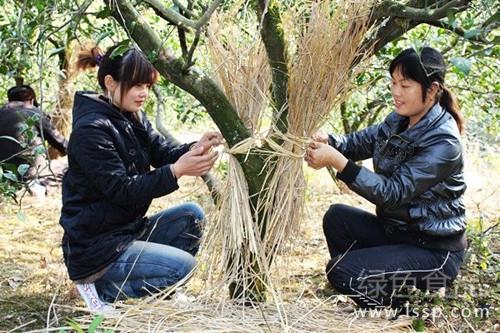
Wind protection for citrus
I. Preventing cold wind damage:
Characteristics of cold wind damage: when a cold wind blows, a large number of leaves suddenly drop, but this differs from leaf drop caused by freezing injury. Freezing injury leaf drop: after the leaves are frozen, they gradually turn brown and die, remaining on the branches for 1 to 2 weeks before falling; cold wind damage leaf drop: the leaves remain green. For citrus in hilly and mountainous areas, especially on mid-slopes and flat land, low winter temperatures combined with wind often cause this damage, and leaf drop is especially severe on the windward side of the branches and shoots. Cold wind damage leaf drop is caused by low temperatures making it difficult for the citrus root system to absorb water, while transpiration from branches and leaves increases, creating an imbalance between transpiration and water uptake. Preventive measures for cold wind damage:
(1) Set up windbreaks.
(2) Mound soil around the base and cover it, and irrigate in winter, to prevent the soil temperature from dropping and to maintain soil temperature.
(3) Cover the canopy with rice straw or polyethylene film, and also spray water or apply an anti-transpirant insulating agent, which can reduce leaf drop.
(4) Tie the branches with rice straw. In areas exposed to cold winds, from late November to early March of the following year, tie each citrus plant into a bundle with rice straw, achieving a leaf retention rate of more than 80%. On the premise of not breaking the branches, tying tightly is better. This prevents snow accumulation from snapping the branches. The trunk and large branches should be whitewashed. Before tying the branches, spray pesticide to control mites.
Removing snow from citrus
II. Preventing snow damage:
Heavy snow breaks citrus branches, causing severe damage. Trees on the windward side in particular have thick snow accumulation and suffer severe snow damage. Generally, trees with a tall trunk, an upright canopy and a small main branch angle (such as ponkan) suffer more snow damage than those with a short trunk, an open canopy and a large main branch angle (such as Satsuma mandarin). The measures for fighting snow disasters and providing disaster relief are as follows:
(1) During heavy snow, shake the snow off the trees as soon as possible to avoid branches and trunks breaking.
(2) Deal with broken branches and trunks promptly. For those completely broken, saw them off early, smooth the wound, and apply a protective agent such as grafting wax to prevent rot. For those that are torn but not broken, do not saw them off easily. First prop them up with ropes or supports to restore their original position, and apply grafting wax, fresh cow dung, yellow clay slurry, etc. to the injured parts to promote healing and restore growth.
(3) Reorganize the canopy. Where snow accumulation is severe, pruning of undamaged branches and leaves should be as light as possible; for those that have been torn and then bound, prune more heavily according to the severity of the injury, to reduce consumption of nutrients and water and prevent drying out. New shoots growing below the broken branch stubs should be appropriately retained for renewal.
(4) Strengthen management work after snow. After snow damage, the tree body is weakened, so fertilizer should be applied promptly to restore tree vigor. At the same time, tree wounds should be treated promptly to prevent gummosis, bark borers, etc.
(5) Carry out top grafting or replanting. For young citrus that has broken, if the variety is poor, top grafting can be done to change the variety; for those that cannot be renewed, dig them out and replant with new plants.