Causes of Cold Damage to Banana Trees and Fruits and Prevention Methods
Bananas are a tropical fruit, and bananas grown in subtropical and temperate zones are often affected by cold damage, which affects banana yield and quality and causes economic losses. Below, the editor of Green Food Network introduces the causes of banana cold damage and control methods, hoping it will be helpful.
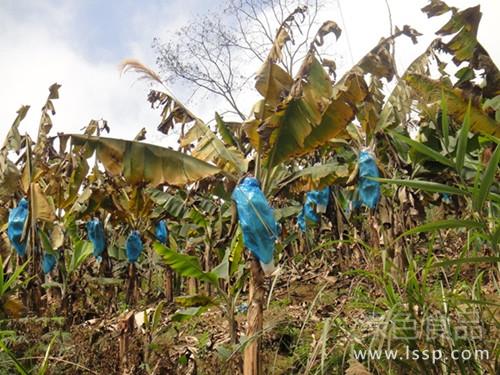
Banana Cold Damage
Causes of Banana Cold Damage:
1. Because nutrients in bananas must be transported from the roots to the leaves through transpiration pull, under low-temperature conditions, leaf transpiration is weak, so nutrients cannot reach the leaves, causing newly emerged leaves to turn yellow and develop notches.
2. Banana flower bud emergence requires a large amount of energy and a relatively high temperature. Low temperatures prevent the supply of minerals and carbohydrates needed for flower bud development and fruit stalk elongation, so the bud bracts are small, the fruit stalk is short, and the fruit fingers are short and small.
3. Bananas originated in the tropics, have thin cell walls, and contain little calcium pectate and lignin. Their vacuoles are rich in potassium to maintain osmotic pressure. Low-temperature rainy weather causes cells to absorb too much water while potassium supply is insufficient. Over time, cell walls become thinner or rupture and lose water, thereby destroying the entire vascular tissue.
Banana Cold Damage Control Methods:
1. Covering with plastic film and sky film: Use black plastic film or rice straw to cover the ridge surface around the mother plant and the suckers' heads of banana plants to prevent cold injury to the banana corm and root system. If rice straw is used for covering, the thickness should be about 20cm, and it should be wetted and pressed with soil to prevent wind from blowing it off. Sky film can more effectively reduce the risk of frost, improve the overwintering ability of bananas, inhibit weed growth, and prevent freezing rain from accumulating at the bottom of the ridges.
Bagging Bananas to Prevent Cold Damage
2. Bagging fruit bunches: For bananas that cannot be harvested in November, especially those whose skin has not yet turned green shortly after the bud is cut off, banana-specific cold-proof bags should be put on in time (if conditions permit, use blue double-layer non-woven bags). Before bagging, first spray fruit-preserving medicine, which can act as a liquid film bagging effect, and can also prevent fruit rust disease, prevent fruit cracking, improve banana coloring and glossiness, reduce pesticide residues, and improve quality. When bagging, first pad with old newspapers and straw paper, which can improve heat preservation capacity, prevent the plastic film from directly contacting the banana fruits, and facilitate normal growth of the banana fruits.
3. Reasonable irrigation and drainage: On clear frosty days, promptly fill the furrows with water to preserve heat and prevent frost. If wet and cold weather occurs, the accumulated water in the banana plantation must be drained to raise the ground temperature.
4. Clearing the plantation and smoking: Remove weeds in the banana plantation and clear away debris in the plantation; pile up dead banana leaves, firewood, sawdust, rice straw, etc. at the edge of the field, and light them on the evening before a cold wave arrives, letting them burn slowly and produce smoke, forming smoke above the banana plantation to reduce cold damage.
5. Applying more warming fertilizers: In winter, apply as little nitrogen fertilizer as possible or do not apply it, to avoid reducing cold resistance due to leaves being too tender and green. More warming fertilizers such as biological bacterial fertilizer, burnt soil, farmyard manure plus decomposed pig and cattle manure should be applied to increase soil temperature and improve the cold resistance of bananas.
6. If new leaves turn yellow and develop notches, and flower bud emergence is weak: Root irrigation can be used to prevent cold, applying biological bacterial fertilizer/humic acid/seaweed acid + high-potassium elemental water-soluble fertilizer to regulate the root system, supplement potassium, strengthen the plant, and enhance the cold resistance of bananas. Alternatively, foliar topdressing of organic calcium + monopotassium phosphate + cold-resistant foliar fertilizer can be applied to bananas, directly supplementing the leaves, flowers, and fruits to promote their normal development.