Causes of Cracked Fruit and Uneven Coloring in Tomatoes Due to Calcium Deficiency and Control Methods
When growing tomatoes, disorders such as blossom-end rot, cracked fruit and poor coloring are common, affecting quality and appearance. These disorders are all caused by calcium deficiency. Therefore, when growing tomatoes, attention must be paid to calcium supplementation to ensure normal and smooth growth of the tomatoes, while extending the flowering and fruiting period, achieving high yield and excellent quality.
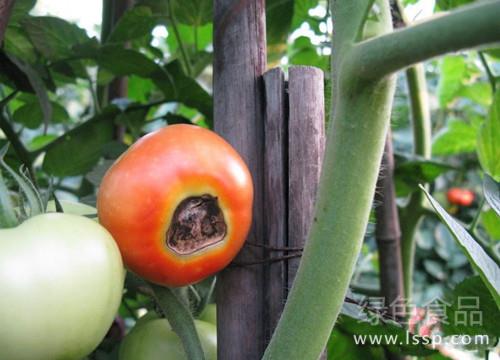
Calcium Deficiency in Tomatoes
I. Symptoms:
The symptoms of calcium deficiency in tomatoes are stunted, thin and weak plants with drooping leaves. In the early stage of calcium deficiency, the edges of the young leaves turn yellow and become wrinkled; in severe cases, the young leaves die. The middle leaves of the tomato plant form large dark brown patches, after which the leaves of the whole plant curl and lose their green color, appearing pale yellow. The navel end of the tomato shows water-soaked spots ranging from light yellow-brown to dark green-brown, with an uneven surface and necrotic tissue in the affected area; this is also called blossom-end rot. During the fruit enlargement and ripening stage, if the calcium supply is insufficient, cracked fruit and poor coloring will occur, forming green-shouldered fruit, ribbed fruit and tea-colored fruit, causing the tomatoes to lose their luster.
II. Causes:
The causes of calcium deficiency in tomatoes: First, excessive application of nitrogen fertilizer and potassium fertilizer hinders the root system's absorption and utilization of calcium; second, the soil is too dry and the soil solution concentration is high, affecting the root system's absorption and utilization of calcium; third, the air humidity is too low, water evaporates abundantly and quickly, and water is not replenished in time, affecting the root system's absorption and utilization of calcium; fourth, if the soil is acidic, its calcium content is low and cannot meet the tomato's need for and utilization of calcium; fifth, the calcium in the soil is fixed and cannot be absorbed and utilized by the root system.
III. Control Measures:
1. Ensure the calcium content of the base fertilizer. When planting tomatoes, using superphosphate or calcium magnesium phosphate fertilizer as the base fertilizer can significantly increase the calcium content of the soil, with 80-100 kg per mu being appropriate. At the same time, adding composted decomposed human, livestock and poultry manure and biological bacterial fertilizer as base fertilizer can increase the content of active calcium in the soil, facilitate absorption and utilization by the tomato root system, and avoid calcium deficiency during tomato growth. For acidic soil, when preparing the land, scatter 50-60 kg of slaked lime powder per mu to neutralize soil acidity and increase soil calcium.
2. Spray water-soluble calcium on the leaves. During tomato growth, spray water-soluble calcium on the leaves once every 7-10 days, for 2-3 consecutive sprays; the calcium supplementation effect is good and can promptly correct various physiological disorders caused by calcium deficiency. In particular, the tomato fruit enlargement and ripening stage is a key time for calcium supplementation and must not be neglected. You can spray 0.3%-0.5% calcium nitrate aqueous solution, 0.1%-0.2% calcium chloride aqueous solution, 400-500 times active calcium aqueous solution, etc., which can effectively supplement calcium.
3. Ensure water supply. During the tomato growing period, especially the flowering and fruiting period, a sufficient water supply must be ensured. When high temperature and drought occur, pay attention to watering and irrigation to keep the soil moist, so as to promote the root system's absorption of calcium, improve the root system's utilization rate of calcium, and effectively prevent physiological calcium deficiency.