Severe bleeding in walnut makes grafting survival difficult, and grafted seedling management is key
Because walnut trees contain large amounts of juglone (commonly known as tannin) in their tissues and bleed heavily, survival after grafting is difficult. However, with scientific management, the survival rate of grafted walnut seedlings can reach 85%, or even above 90%. The key techniques are as follows:
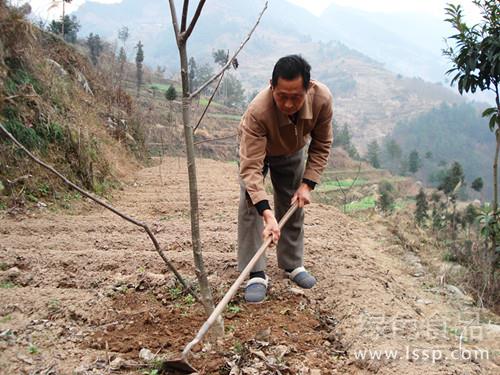
Walnut seedling management
1. Remove the top and keep leaves promptly after grafting.That is: within three days after grafting the walnut, all leaves and branch buds below the graft bud must be removed, and at the same time all branch, leaf and buds except the two leaves above the graft bud must be cut off. The grafted seedlings must be kept well ventilated and exposed to light, but this should be done on cloudy days or during periods with dew.
2. Second pruning of the rootstock.10 to 12 days after grafting, a second pruning of the rootstock must be carried out promptly; in case of low temperatures and rainy days, it should be delayed accordingly. Specific method: facing away from the graft bud at a 45-degree angle, cut off the reserved leaves above the graft bud, with the cut 1.5 to 2 cm above the upper opening of the graft bud. For ungrafted small seedlings and missed grafted seedlings, the tops must also be cut to ensure good light and heat conditions for the grafted seedlings.
3. Remove sprouts, weed and fertilize.After the second pruning of the rootstock, all sprouts other than the graft bud must be removed promptly; they must be removed early, while small, and completely, to avoid sprouts competing with the graft bud for water and nutrients. Weeding can be done together with sprout removal. When the graft bud sprouts and grows to 5 cm, carry out one foliar fertilization, using 0.3% urea + brassin or auxin; to prevent infection at the graft union and damage by leaf-eating insects, when fertilizing, simultaneously spray anti-rot and insecticidal agents.
4. Untie.When the grafted seedlings have grown to an average of more than 10 cm, untie promptly. Method: use a blade to slit the plastic strip from bottom to top on the back side of the graft union, but do not cut it completely through (leave 0.5 cm at the upper opening), and do not remove the plastic strip. While untying, make a final cleanup of any missed sprouts to ensure normal growth of the grafted walnut seedlings.
5. Promote growth and strengthen the plants.After untying, the walnut seedlings enter a stage of vigorous growth, which generally lasts 25 to 30 days; water and fertilizer management must be strengthened. In the early stage, spray 0.3% urea + brassin or auxin on the leaves twice, once every seven days; in the later stage, spray 0.3% monopotassium phosphate 3 times consecutively, once every seven days, to promote early lignification, and promptly lightly pinch the growing tips of vigorously growing seedlings (one heart and one leaf is enough) to improve cold resistance for overwintering.
6. Cold protection for overwintering and frost protection in early spring.First, before the Start of Winter, spray an antifreeze agent on the walnut trunks (such as Kuaihuolin water-retaining antifreeze agent); second, before the soil freezes, irrigate with freezing water, and when the soil thaws in early spring, irrigate the nursery land to lower the soil temperature and delay the sprouting period of the walnut seedlings.