What is the golden apple snail? How to effectively control the golden apple snail
What is the golden apple snail? How to control the golden apple snail? We ask knowledgeable readers to help explain. The golden apple snail, also known as the large bottle snail or apple snail, originated in the Amazon River basin of South America. In 1981 it was introduced to China as an edible snail, and because of its strong adaptability and rapid reproduction, it became a highly destructive invasive alien species. Therefore Zhongdiwang has compiled...
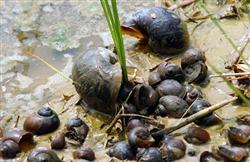 What is the golden apple snail? How to control the golden apple snail? We ask knowledgeable readers to help explain
The golden apple snail, also known as the large bottle snail or apple snail, originated in the Amazon River basin of South America. In 1981 it was introduced to China as an edible snail, and because of its strong adaptability and rapid reproduction, it became a highly destructive invasive alien species. Therefore Zhongdiwang has compiled the harm caused by the golden apple snail and its control methods, listed in detail below for readers' reference.
The harm caused by the golden apple snail:
Because the golden apple snail has an enormous appetite, can gnaw on very coarse plants, and can also scrape and eat algae, its excrement can pollute water bodies. The losses it causes to rice production clearly far exceed its value as a delicacy. In addition to threatening aquatic shellfish and aquatic plants in invaded areas and disrupting the composition of the food chain, the golden apple snail is also an intermediate host of Echinostoma revolutum and Angiostrongylus cantonensis.
After hatching, the golden apple snail begins nibbling on aquatic plants such as rice once it has grown slightly, and is especially fond of tender young parts. The golden apple snail is a new pest. The main damage period is from rice transplanting until field drying. It bites and cuts the main tillers and effective tillers of rice, reducing the number of effective panicles and causing yield loss.
In addition, the shell of the golden apple snail is sharp and easily cuts farmers' hands and feet, and the golden apple snail has omnivorous feeding habits and damages lotus roots. Young snails can gnaw from the underside of leaves on lotus leaves floating on the water surface, causing holes or notches in the leaves; in severe cases the leaves are eaten full of holes and have difficulty rising off the water surface.
Control methods for the golden apple snail:
Method one: raising ducks to eat the snails.The duck release period is from 7 to 10 days after rice transplanting until the late booting stage of rice. Each morning and at five or six o'clock in the afternoon, release ducks (15 to 30 per mu) into the rice fields and ditches once each time to peck at young snails, reducing the snail population and lessening the damage.
Method two:During the spring peak egg-laying period, in combination with field management, remove egg masses in the fields and along ditch edges, carry them away from the rice fields to feed ducks, or crush the egg masses. Since during field drying the adult snails are mainly concentrated at irrigation and drainage outlets and in seedling field ditches, collect snails manually in the morning and afternoon. Manually remove egg masses and collect adult snails in combination with farming schedules. By taking advantage of the fact that during field drying the adult snails are mainly concentrated at irrigation and drainage outlets and in seedling field ditches, manual snail collection can also control the damage.
Method three: use manual trapping methodsAfter the rice field is flooded, insert bamboo strips (wooden sticks, rapeseed straw) 30 to 100 cm high into the rice field to lure the golden apple snails to concentrate and lay eggs on the bamboo strips (wooden sticks, straw), and remove the egg masses every 2 to 3 days for destruction. The quantity should preferably be 30 to 80 bamboo strips (wooden sticks, straw) per mu, with appropriately more inserted near the field edges to make egg mass removal convenient.
Method four: chemical control methods:
1. At the 2-leaf 1-heart stage of rice in the seedling field, apply 10% Woju granules at about 400 to 500 grams per mu, evenly broadcast in the field or mixed with 5 to 10 kg of fine soil and broadcast.
2. At rice transplanting, apply 6% Mita molluscicide granules at about 400 to 550 grams per mu, evenly broadcast in the field or mixed with 5 to 10 kg of fine soil and broadcast; if the golden apple snail damage is severe, apply the pesticide again after 10 days.
3. You can also use 70% niclosamide ethanolamine salt wettable powder at 60 grams per mu, diluted with 20 kg of water for spraying.
Precautions:When applying the pesticide, the field water layer should be 1 to 3 cm, and water should be retained for 7 days.
If there is heavy rain within 24 hours after application, one supplemental application is needed.
Molluscicides are toxic to fish. Within 7 days after application, field water must not be discharged into fish ponds, and ducks must not be released.
How to make sticky insect boards
What are white grubs?