What kind of pesticide is emamectin benzoate?
What is emamectin benzoate? How is emamectin benzoate best used? We ask readers who know about it to help introduce a biological pesticide commonly used on vegetables, melons and fruits, fruit trees, field crops and other crops that leaves no residue and causes no pollution: emamectin benzoate. But what exactly...
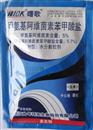 What is emamectin benzoate? How is emamectin benzoate best used? We ask readers who know about it to help introduce it
A biological pesticide that leaves no residue and causes no pollution is currently commonly used on vegetables, melons and fruits, fruit trees, field crops and other crops: emamectin benzoate. But what exactly is emamectin benzoate, and what are the methods for using emamectin benzoate? Many readers still do not know much about it, so Zhongdi Network has compiled information on emamectin benzoate and its methods of use, listed in detail below for readers' reference.
The effects of emamectin benzoate:
Emamectin benzoate is a biological pesticide that leaves no residue and causes no pollution. It has extremely high activity against the larvae of Lepidoptera insects and many other pests and mites. It has both stomach-poison action and contact-killing action, and gives good results at very low doses (0.084-2g/ha). Moreover, while controlling pests it does no harm to beneficial insects, which is helpful for integrated pest management. It also broadens the insecticidal spectrum and reduces toxicity to humans and livestock.
Emamectin benzoate can enhance the action of neurotransmitters such as glutamate and gamma-aminobutyric acid (GABA), thereby causing a large amount of chloride ions to enter nerve cells, making the cells lose function and disrupting nerve conduction. After contact, larvae immediately stop feeding and undergo irreversible paralysis, reaching the highest mortality rate within 3-4 days.
Because emamectin benzoate binds tightly to soil, does not leach, and does not accumulate in the environment, and can be transferred through translaminar movement, it is very easily absorbed by crops and penetrates into the epidermis, giving treated crops a long-lasting residual effect. After more than 10 days a second peak in insecticidal mortality rate appears, and it is also rarely affected by environmental factors such as wind and rain.
Pests that emamectin benzoate can control:
Emamectin benzoate has activity against many pests that other pesticides cannot match, and is especially highly effective against Lepidoptera, Diptera and thrips, such as the red-banded leafroller, tobacco budworm, cotton bollworm, tobacco hornworm, diamondback moth and armyworm, beet armyworm, fall armyworm, cabbage looper, cabbage webworm, imported cabbageworm, cabbage stem borer, tomato hornworm, Colorado potato beetle, Mexican bean beetle and others.
Methods for using emamectin benzoate:
1. To control cotton bollworm, leafroller species, leafminer moth species, diamondback moth, beet armyworm, tobacco cutworm and other pests, apply at the peak egg-hatching stage to the young larval stage, using 30-50 milliliters per mu diluted in 30-50 kilograms of water for spraying, or spray with a 1000-2000 times dilution;
2. To control red (white) spiders, spray with a 4000-5000 times dilution of 1.9% emamectin benzoate emulsifiable concentrate at the early stage of occurrence;
3. To control pear psylla, spray with a 3000-4000 times dilution of 1.9% emamectin benzoate emulsifiable concentrate;
4. To control leafminer moth species (such as the Asiatic apple leafminer), spray with a 3000-4000 times dilution of 1.9% emamectin benzoate emulsifiable concentrate at the early stage of occurrence.
5. To control diamondback moth on vegetables, use 10-12 grams of 1% emulsifiable concentrate, diluted in 50-60kg of water, and spray evenly at the peak stage of young larvae.
6. To control beet armyworm, use 15-25 grams of 1% emulsifiable concentrate per mu, diluted in 50-60kg of water, and spray evenly at the peak stage of young larvae.
7. To control tobacco budworm, use 50-75 grams of 1% emulsifiable concentrate per mu, diluted in 50-60kg of water, and spray evenly at the peak stage of young larvae.
Precautions for using emamectin benzoate:
1. It should not be mixed with alkaline substances.
2. Emamectin benzoate has no systemic action, so spraying should be as even and thorough as possible.
3. For boring and leaf-mining pests, emamectin benzoate should be used during the egg-hatching period or the young larval stage.
What is the golden apple snail
How to make sticky insect boards