What Is Bacillus thuringiensis? A Detailed Explanation of Its Effects and Uses
What is Bacillus thuringiensis? Which pests can Bacillus thuringiensis control? We ask knowledgeable readers to help explain. Bacillus thuringiensis, also called Bt (abbreviated as Bt), is currently the biological insecticide with the largest output and the widest use. Bacillus thuringiensis insecticides have advantages such as being specific, highly effective and safe for humans and livestock...
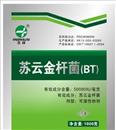 What is Bacillus thuringiensis? Which pests can Bacillus thuringiensis control? We ask knowledgeable readers to help explain.
Bacillus thuringiensis, also called Bacillus thuringiensis (abbreviated as Bt), is currently the biological insecticide with the largest output and the widest use. Bacillus thuringiensis insecticides have advantages such as being specific, highly effective and safe for humans and livestock. At present, commercial formulations of Bacillus thuringiensis have reached more than 100 types, making it the most widely applied, largest-volume and best-performing microbial insecticide in the world, and thus it attracts much attention.
Therefore, Zhongdi Network has compiled the insecticidal principles, control targets and precautions of Bacillus thuringiensis, listed in detail below for readers' reference.
Pests that Bacillus thuringiensis can control:
Bacillus thuringiensis has outstanding effects on pests of Lepidoptera, Coleoptera, Diptera, Hymenoptera, Homoptera and others, such as imported cabbageworm, diamondback moth, beet armyworm, tobacco cutworm, cabbage moth, tobacco budworm, corn borer, rice leaf roller, striped stem borer, tea tussock moth, tea black tussock moth, fruit borer, inchworm, rice skipper and so on.
The insecticidal principle of Bacillus thuringiensis:
Bacillus thuringiensis is a low-toxicity microbial insecticide, generally mainly stomach poison. The main components of Bacillus thuringiensis are bacterial toxins and spores, and its mode of action is stomach poison.
Bacillus thuringiensis can produce two major types of toxins, namely endotoxin and exotoxin. After pests swallow the bacterial powder, under the action of the toxins, the pests quickly stop feeding and no longer continue to cause damage, and finally the pests die from starvation, while the exotoxin acts slowly and has an obvious effect during molting and metamorphosis. These two periods are the peak periods of RNA synthesis, and the exotoxin can inhibit DNA-dependent RNA polymerase.
After pests swallow the bacterial powder, Bacillus thuringiensis poisoning and feeding cessation occur within 1~2 hours, and at the same time the bacterial powder germinates in the insect body and multiplies in large numbers, causing the pests to die. The whole process generally takes 1~2 days, so when using it, it should be applied 2~3 days earlier than conventional chemical agents, and the effect is better when used on young pests.
The residual period of Bacillus thuringiensis formulations is about 10 days.
Precautions for Bacillus thuringiensis:
Precaution 1: Bacillus thuringiensis can fully exert its effect only when the temperature is relatively high (generally above 20 degrees), so application in July to September has the best effect; when applying Bacillus thuringiensis, it is better to apply it 2~3 days earlier than chemical pesticides.
Precaution 2: Bacillus thuringiensis is non-toxic to bees and fish, but it is highly toxic to silkworms, so it should be used cautiously in silkworm-rearing areas.
Precaution 3: Bacillus thuringiensis must not be mixed with fungicides during application.
What are white grubs? How are white grubs controlled?
What is emamectin benzoate?