Improper fertilization of vegetables can easily cause phytotoxicity, so these issues need attention
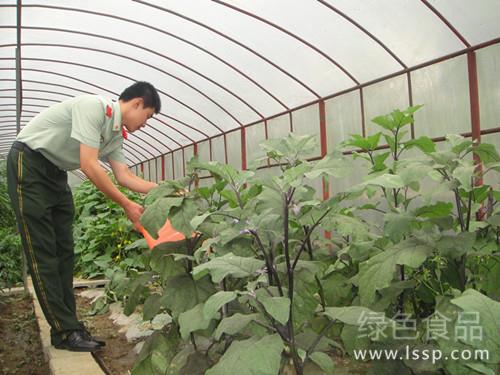
Vegetable fertilization
1. Application of ammonium nitrate:Leafy greens such as bok choy, napa cabbage, amaranth, celery, and spinach have a short growing period and readily absorb nitrate nitrogen fertilizer, causing the nitrate content of the vegetables to exceed standards, so ammonium nitrate should not be applied.
2. Foliar spraying of pure nitrogen fertilizer:Leafy vegetables should not be sprayed on the leaves with nitrogen fertilizers such as urea or ammonium sulfate, nor with human urine. When urea, ammonium sulfate, or human urine is sprayed on the leaves, the nitrate content increases, affecting human health.
3. Do not irrigate immediately after applying urea:Only under the action of urease secreted by soil microorganisms can urea be converted into ammonium carbonate or ammonium bicarbonate that can be absorbed and used by vegetable roots, or adsorbed and retained by the soil. If urea is irrigated immediately after application or leached by rain, the amide-form nitrogen will be lost with the water, causing nitrogen loss. Irrigating 5—7 days after applying urea can avoid unnecessary nitrogen loss.
4. Do not apply ammonium sulfate continuously multiple times:In acidic soil or calcareous vegetable fields, if ammonium sulfate is applied continuously multiple times, it will make acidic soil more acidic; it will cause calcareous soil to become compacted, hindering vegetable growth.
5. Ammonium bicarbonate should not be used when the vegetable field lacks water:Ammonium bicarbonate is extremely unstable and easily lost through volatilization, especially when the vegetable field lacks water, the loss is even more serious. When applying ammonium bicarbonate to vegetable fields, whether as a base fertilizer or a topdressing, it should be applied deeply under moist conditions, and the soil should be covered immediately after application.
6. Do not apply too much phosphate fertilizer:If phosphate fertilizer is applied in large amounts year after year in vegetable fields, the phosphate supply is excessive, especially when the application rate exceeds 40 kg per mu, the harm is great, seriously affecting vegetable development, causing premature senescence of vegetables, poor growth, reduced yield, and deteriorated quality. Generally, 15—20 kg per mu is appropriate.
7. Leafy greens must never be given undecomposed human manure:Fresh human excrement, especially in manure pits of public toilets in hospitals, stations, docks, restaurants, and other places, contains various infectious pathogens and parasite eggs. If this kind of manure is directly splashed onto leafy greens without composting or treatment, the vegetables become contaminated, and it can even lead to the spread of infectious diseases and parasitic diseases. To use this kind of manure, it can be applied after harmless treatment such as sealed composting, biogas digester fermentation, or chemical treatment.
8. Livestock pen manure should be composted before application:Pig and cattle feed mostly uses straw and weeds, and the straw and weeds are mixed with many weed seeds. The weed seeds in livestock manure and barnyard manure have strong vitality and can still germinate and reproduce after being brought into vegetable fields with the pen manure, causing great harm to vegetables. The barnyard manure should be removed from the pen and subjected to high-temperature composting to kill the weed seeds, parasite eggs, and pathogenic bacteria in the livestock pen manure. Generally, about 2 months of natural composting is enough before application; if a biological fermentation agent is used for treatment, 10 days of composting is enough.