High-yield field management for lilies: carry out topdressing, drainage and pest and disease control
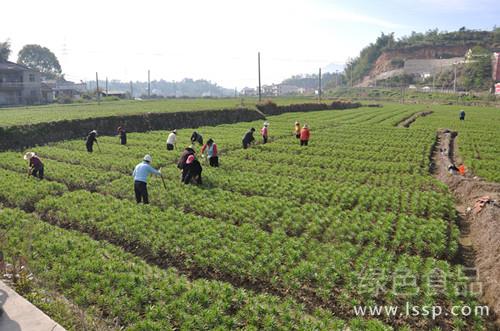
Fertilizing lilies
1. Topdressing and drainage: During the overwintering period of lilies, apply a winter fertilizer once before the soil freezes, using 20 kg of urea and 30 kg of potassium chloride per mu; at the same time, combine this with clearing the drainage ditches, carry out earthing up to protect the roots, keep the drainage ditches unobstructed, prevent waterlogging in the field, and reduce rotting of lilies caused by excessive moisture. In spring, before emergence, apply supplementary topdressing twice, each time using 50 kg per mu of a three-element sulfur-containing compound fertilizer or 2.5 kg of sulfur. After emergence, spread a layer of millet straw in the field to prevent soil crusting and to retain moisture, preserve nutrients and lower temperature.
2. Plastic film mulching cultivation: Cover lilies with film for 30 to 40 days in early spring; this can shorten the emergence period of lilies by 7 to 15 days and increase yield by 12%.
3. Topping the stems at the right time: Base this on the number of leaves. It is most suitable to top the growing tip when lilies have grown more than 60 leaves and the daily average temperature has not exceeded 23°C. Trials show that topping the growing tip increases yield compared with not topping, timely topping increases yield compared with late topping, and with timely topping, the more leaves retained, the greater the yield increase.
4. Preventing early withering of green leaves: It is necessary to extend the lifespan of functional leaves. In the later growth period of lilies, plants with green leaves have larger bulbs and higher yields. For this reason, in late June, when bulb enlargement slows, apply a foliar fertilizer once using a mixture of 0.2% potassium dihydrogen phosphate plus 0.3% to 0.5% urea.
5. Pest and disease control: Within 1 to 2 days after sowing, spray 50 to 80 g of acetochlor per mu to prevent weeds from growing densely. During the lily growth period, the main pests and diseases are cutworms, aphids, viral diseases and so on. In the early stage of viral disease, spray 1.5% plant disease spirit emulsifiable concentrate at 1000 times dilution, or antiviral agent No. 1 at 300 times dilution, once every 10 days, for 2 to 3 consecutive sprays. For aphids after emergence, spray 50% methamidophos emulsifiable concentrate at 1500 times dilution, or use 40% omethoate for control. In late April, apply 6 to 8 kg of carbofuran per mu or 0.5 kg of phoxim as poisoned soil to kill underground insects.