Causes of Bolting in Celtuce with Small Leaves, Few Leaves, Thin Stems, Sparse Plants and Spindly Overgrowth, and Control Methods
Celtuce is now grown year-round in many places. However, during cultivation, premature bolting of celtuce easily occurs, showing small and few leaves, thin stems, sparse plants, and tender stems that grow spindly and shoot up in a club shape, affecting yield and lowering quality. The causes of premature bolting in celtuce and control measures are described below:
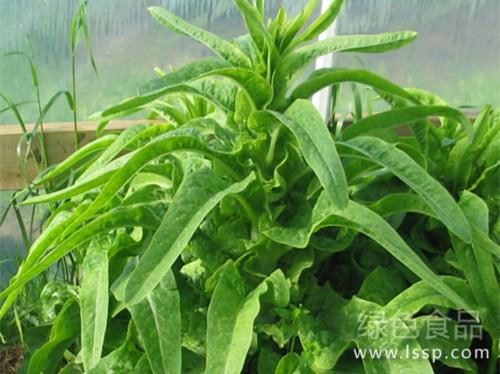
Celtuce bolting
(1) Improper variety selection. Countermeasures: For celtuce planted in spring and harvested in summer, or planted in summer and harvested in autumn, since it grows under high temperature and long-day conditions, mid- and late-maturing varieties that are tolerant of high temperature and less sensitive to long days should be selected. For early-maturing varieties, if planted in early spring but transplanted late, they are prone to bolting due to the high temperature and long days in the later period.
(2) Unsuitable sowing time. Countermeasures: For celtuce cultivation, the appropriate sowing period should be mastered. Generally, spring celtuce is sown in the open field in early October, and in protected cultivation around late January of the following year; summer celtuce is sown in early April; autumn celtuce is sown in early August; and winter celtuce is sown in late August.
(3) Poor seedling-stage management. Specific measures: The base fertilizer in the seedbed should be mainly organic fertilizer, which can be combined with an appropriate amount of compound fertilizer; sow thinly at an appropriate rate, thin the seedlings in time, control watering so that the seedbed soil alternates between dry and moist, and for shade-grown seedlings, gradually cover later and uncover earlier after full emergence, and stop shading after 3 leaves; during the seedling stage of summer and autumn celtuce, spray 1 to 2 times with a 500 mg/kg chlormequat solution, which can effectively prevent spindly growth.
(4) Delayed transplanting. Measures: Seedlings of the appropriate age with 5 to 6 leaves should be transplanted in time. For autumn-sown and spring-harvested seedlings, the seedling age is about 40 d; for spring-sown and summer-harvested or summer-sown and autumn-harvested seedlings, the seedling age is about 25 d; for autumn-sown and winter-harvested seedlings, the seedling age is 30 to 35 d.
(5) Overcrowded cultivation. Measures: Under normal conditions, spring-harvested celtuce can be planted moderately densely to obtain benefits, with 8000 plants per mu; summer-harvested celtuce, because it is prone to spindly growth under high temperature and long days, should be planted sparsely, with 5000 plants per mu; autumn-harvested celtuce, as the temperature is suitable in the later period, can be planted at 7000 plants per mu, giving good market quality and high yield.
(6) Insufficient intertillage and loosening of the soil. Measures: After transplanting and seedling recovery, intertillage should be carried out in time, hoeing deeply and thoroughly to facilitate seedling restraint, promote root development, and increase rosette leaves so that the tender stems grow robustly.
(7) Inappropriate watering amount. Measures: Celtuce should be watered in an appropriate amount, preventing both “waterlogging-induced spindly growth” and “drought-induced spindly growth”. Before the rosette leaves form and the plants close the rows, watering should be properly controlled so that the bed surface alternates between dry and moist; after the rows close, water supply should be increased to keep the bed surface moist, so that the tender stems grow and expand rapidly.
(8) Insufficient fertility or excessive application of nitrogen fertilizer. Measures: Base fertilizer should be applied in sufficient amount, with 4000 kg of decomposed manure and 25 kg of compound fertilizer per mu, combining organic fertilizer with compound fertilizer. In addition, seedling-recovery fertilizer, rosette-stage fertilizer, and stem-promoting fertilizer should be applied as topdressing. Each topdressing application should use 15 to 20 kg of ammonium sulfate or urea per mu, or the first 2 applications should each use 1000 kg of 50% dilute manure water.
(9) Unsuitable climatic conditions. Measures: In high-temperature seasons, in addition to strengthening fertilizer and water management, chlormequat should also be sprayed regularly. Spraying chlormequat can delay celtuce bolting, promote leaf growth, increase the nutritional area of celtuce, and thicken the tender stems. Spraying generally starts at the rosette stage, once every 7 to 10 d (days), for a total of 2 to 3 sprays, at a concentration of 350 mg/kg.
(10) Delayed harvesting. Measures: If harvesting is to be postponed, pinching off the tips and removing the flower buds can effectively control celtuce from shooting up and bolting, that is, during the “flat-top” stage, promptly pinch off the top growing point or flower buds of celtuce on a sunny day. After topping, celtuce can inhibit top growth, increase the return of nutrients to the stem, prevent the tender stems from becoming hollow, and promote stem enlargement, allowing harvest to be delayed by 5 to 7 d (days) and increasing yield by 10% to 20%.