Early bolting in onions affects yield: causes and control methods
Among overwintering crops, onions, rapeseed and others often suffer large-scale early bolting due to warm winters and the planting of strongly spring-type varieties, leading to reduced yields. To effectively prevent bolting, the causes of early bolting in onions and preventive measures are discussed here.
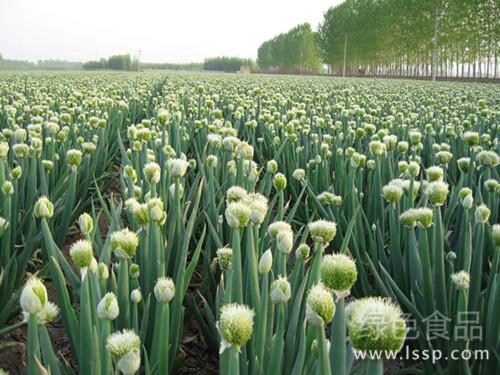
Onion bolting
I. Main causes:
1. Related to variety: Onion varieties with strong spring habit are overly sensitive to low temperatures and easily pass through the vernalization stage under low-temperature conditions, thus triggering bolting.
2. Related to warm winters: Onion is a low-temperature-sensitive plant that undergoes vernalization as a green plant; temperature and sunlight are important conditions that induce onion bolting. When onion seedlings have 3—4 true leaves, a pseudostem diameter of more than 0.7cm, and a seedling weight of 10—15 grams, they sense a low temperature of 2—5℃ and complete vernalization after 60—130 days, and then in the following spring under long-day conditions and relatively high temperatures they can bolt, flower, and set seed. Years of observation have found that the more severe the warm winter, the higher the onion bolting rate.
3. Related to cultivation techniques: The severity of onion bolting is related to how early or late the sowing date is; for the same variety, the bolting rate of early sowing is higher than that of late sowing.
4. Related to density: Transplanting too early, relatively sparse density, excessive fertilizer and water, overly vigorous seedling growth, excessive nutrition, or insufficient fertilizer and water later, poor nutrition, and imbalanced growth promote flower bud differentiation and can also cause early bolting.
5. Related to fertilizer and water: Too many topdressings, under relatively high temperatures, also easily encourage bolting.
II. Preventive measures:
1. Choose suitable varieties: Adapt to local conditions and select suitable improved varieties, which can both increase yield and income and effectively reduce the bolting rate.
2. Sow at the right time: Timely sowing is not only a key measure to prevent early bolting in onions, but also the key to high yield; it can avoid both excessive seedling growth, pseudostem diameter exceeding 0.6cm, and an increased bolting rate caused by sowing too early, and small seedling growth, small bulbs, and low yield caused by sowing too late.
Onion fertilization
3. Rational fertilization: The demand ratio of high-yield onions for nitrogen, phosphorus, and potassium fertilizer is 2.1:1:2.3. Onion roots are shallow in the soil, so in fertilizer application, well-rotted farmyard manure, compost, and plant ash are mainly used. For base fertilizer, apply 2000—3000 kilograms per mu plus 50 kilograms of compound fertilizer; after transplanting and survival, apply about 750 kilograms of well-rotted human and animal urine per mu; topdress 1—2 times, and while applying nitrogen fertilizer, add 5—7.5 kilograms of potassium sulfate, or 75—150 kilograms of plant ash.
4. Rational close planting: When transplanting, make good soil beds and clear ditches and paths to facilitate prevention of winter drought. In addition, attention should be paid to doing good intertillage and loosening the soil, and removing weeds in time.
5. Prevent warm winters: A warm winter is one of the key factors in premature bolting of onions. Therefore, great attention must be paid; in warm winter years, do a good job of controlling water and fertilizer during the overwintering period, promote vegetative growth, control reproductive growth, and reduce the premature bolting rate. When premature bolting onions appear in the field, remove the bolts promptly to reduce yield loss.