How to prevent deformed zucchini fruit from affecting appearance
The causes of deformed zucchini are these: insufficient water and fertilizer; in the early fruit-setting stage it easily forms pointed-tip fruit, in the middle stage it easily forms narrow-waisted fruit, and in the late stage it easily forms slender crooked-stem fruit. But too much fertilizer and water in the middle stage easily forms big-bellied fruit. Poor pollination, with pollen distributed unevenly, causes sunken areas where pollination is insufficient. Too high or too low a temperature affects the photosynthetic efficiency of zucchini, leading to insufficient nutrients and inhibiting fruit development. A defect in the female flower itself or a bisexual flower forming zucchini causes deformity.
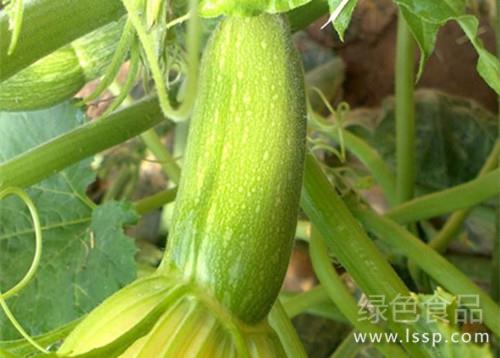
Deformed zucchini
Meet the fertilizer and water requirements. Zucchini needs a lot of fertilizer, has strong nutrient-absorbing ability, and is relatively drought-tolerant, but it needs a lot of water during the swelling stage and the soil must be kept moist. Therefore, first, apply sufficient base fertilizer; second, combine nitrogen with potassium and topdress in time; after each batch of fruit is harvested, topdress once. In the base fertilizer, apply 5000 kg of high-quality farmyard manure per mu, 300 kg of cake fertilizer, 100 kg of phosphate fertilizer, and 50 kg of potassium fertilizer, and at the same time apply zinc fertilizer and magnesium fertilizer in appropriate amounts. In the early stage, field moisture should mainly be controlled by drying; during the fruiting stage, it should be kept moist.
Pay attention to regulating temperature. For early-maturing cultivation, plastic film greenhouses with small tunnels inside are often used to increase and maintain temperature. The suitable temperature range for zucchini is 15—38℃, and the optimum temperature for growth and development is 18—25℃; the suitable soil temperature is 12—35℃, and the optimum soil temperature is 15—25℃. Therefore, according to climate changes, adjust the time for uncovering and covering the film, and in particular carry out variable-temperature management according to the temperature requirements of zucchini, which is more conducive to accumulating nutrients and reducing consumption.
Carry out artificial pollination. Every day from 8—10 a.m. is the peak period for male flowers to open; pick the male flowers, remove their corollas, and gently place the anthers on the stigma of the female flowers. One male flower can pollinate 3 female flowers, and when the air humidity is relatively high, the pollination effect is better. Pollination should be even and thorough. To ensure fruit set, it should be combined with hormone treatment: use 20—30 mg/L 2,4-D and, on the morning of the flowering day, dip a brush in the liquid and apply it to the flower stalk or ovary, but do not let the liquid splash onto the stems and leaves to prevent phytotoxicity; 40—50 mg/L Tomato Hormone can also be sprayed on the stigma of the female flowers of zucchini.