Oyster Mushroom Soil-Casing Cultivation Technique: Increase Benefits Without Increasing Costs
In oyster mushroom production, using the soil-casing cultivation technique produces oyster mushrooms with plump fruiting bodies, short stems, thick caps, and bright color, with excellent taste and flavor. Yields can increase by 30%-50%, raising benefits without increasing costs, making it an innovation in oyster mushroom cultivation technique.
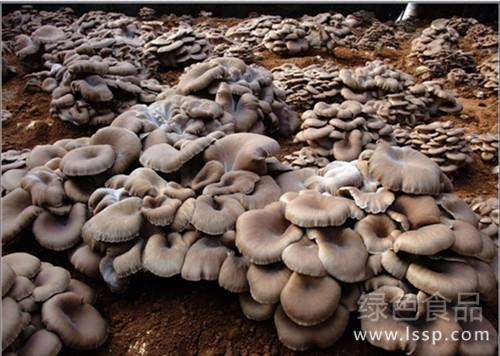
Oyster Mushroom Soil-Casing Cultivation
1. Theoretical Basis:
Water management in oyster mushroom cultivation is a key factor for achieving high yields, including regulating the moisture of the growing medium, regulating the moisture of the surrounding humidity, regulating moisture during the fruiting period, and regulating moisture during the growth period. Soil-casing cultivation, however, makes it easy to regulate moisture flexibly and can better solve the problem of oyster mushrooms being too dry or too wet.
2. Selection of Casing Soil Material:
The best choice is a slightly alkaline heavy loam soil with loose texture, many capillary pores, good aggregate structure, that is not sticky when wet and does not crumble when dry, with strong water retention and high organic matter content. Avoid excessive clods, sandy soil, and raw soil. Improved prepared soil can also be used. The preparation method is: take garden soil from within 20cm of the surface or surface soil from ditches and rivers, break it up, remove crop residual roots and debris, add 10% plant ash, 10% cottonseed hulls, 2% superphosphate, 0.2% urea, 3% lime powder, 1% table salt, mix well, then spray with 500-fold chlorothalonil and 1500-fold dichlorvos, seal with plastic film for 2 days before use.
3. Soil-Casing Method:
Generally, the flat-bed surface soil-casing method is used. After the oyster mushroom bags are fully colonized and have gone through the post-ripening period, prepare beds at the cultivation site at 1.2 m intervals, with length depending on the site, bed depth of 20cm, loosen and break up the bed bottom, sprinkle a small amount of lime powder, spray dichlorvos and formaldehyde to disinfect and kill pests. After removing the bags, cut the substrate blocks in the middle. Place them vertically in the bed with the inoculation surface facing up, with 5cm spacing between blocks. Spread casing soil to fill all gaps until the soil layer is 2cm thick. Then carry out flood irrigation so the casing soil layer absorbs enough water, and shortly after level off any exposed or sunken areas. Finally cover with plastic film to cultivate the mycelium. Other management follows the same routine. In this way, primordia can appear in about 7 days. During the fruiting period, keep the soil layer moist, and adjust water to the oyster mushroom fruiting bodies according to temperature, ventilation, and fruiting conditions. When adjusting water, use a spray. Before harvesting mushrooms, it is best not to spray water.