How to protect vegetables from freezing? Multiple cold waves bring the coldest rain and snow weather this week
This week, southern China will face a major cold wave boss, which, besides a sharp drop in temperature, will also bring rain and snow, so vegetable growers need to do a good job of insulating and protecting vegetables from freezing.
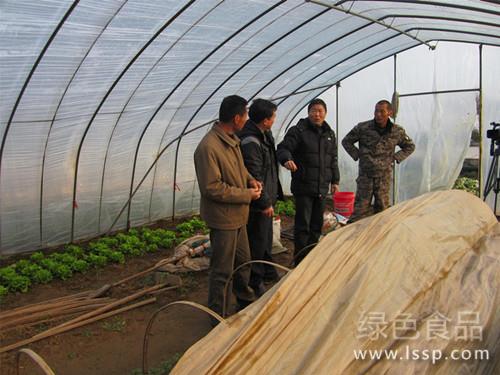
Insulating and protecting vegetables from freezing
1. Strengthen covering to keep warm and prevent freezing. Open-field vegetables can be covered with straw, shade netting, plastic film, etc., to block frost, raise soil temperature, and prevent freeze damage. For example, for lettuce, spinach, Chinese cabbage bolts, red vegetable bolts, celery, garlic, spring cabbage, Chinese cabbage, etc. in the field, greenhouse film or shade netting can be used for covering to prevent the leaves from freezing; after snow, the snow on the greenhouse film or shade netting should be swept off promptly;
2. For greenhouse vegetables, first, reinforce the greenhouse to prevent strong winds from lifting the film, and promptly remove snow to prevent accumulated snow from collapsing the greenhouse. Second, add small arched tunnels inside the greenhouse, cover them with film at night, and place straw mats on the film. Cover the lower edge of the greenhouse with plastic film as a skirt to reduce the invasion of cold air from the bottom. Third, install electric lights in the greenhouse; on weak-light cloudy and rainy or snowy days, turn on the lights in the morning and evening for about 3 hours each to supplement light, so as to raise the temperature inside the greenhouse and also promote photosynthesis in vegetables. Fourth, use carbendazim and chlorothalonil smoke agents to prevent diseases. Fifth, after the weather clears, adopt the method of covering with flower curtains and repeatedly ventilate, then slowly raise the temperature to restore normal growth, so as to prevent sudden strong light and rapid warming from causing seedling burn.
3. Apply fertilizer and earth up soil to raise soil temperature. On sunny days, apply warm fertilizers such as cow manure, pig manure, and compost around the root zone of vegetables, which can raise soil temperature by 2--3°C. At the same time, before freezing, in combination with intertillage, place the loosened soil around the root zone of vegetables, which can both loosen the soil and protect the root system; the suitable intertillage depth is 7--10 cm.
4. Clear ditches and beds to prevent waterlogging damage. For low-lying vegetable plots prone to waterlogging, ensure that all ditches are unobstructed. After rain and snow, promptly remove snow, clear ditches and beds, and drain standing water to prevent the melting snow from absorbing a large amount of heat and lowering the temperature, so as to improve the vitality of the vegetable root system.
5. Control nitrogen and spread ash to improve cold resistance. Before low-temperature freeze damage arrives, spread a layer of plant ash on the vegetable ground, which can prevent cold and freezing, increase nutrients, and also prevent root rot in cruciferous vegetables.
6. Set up windbreaks to block cold wind. On the north side of the vegetable plot, use crop straw, etc., to weave windbreak barriers 1—1.5 m high, so as to prevent cold wind from directly attacking vegetables and reduce freeze damage.