Vegetable calcium deficiency causes stunted plants and sunken, necrotic fruit: how to prevent and control it?
Calcium is an indispensable element for vegetable growth, and most vegetables favor calcium. Under calcium deficiency, it causes physiological disorders in vegetables, hinders growth, prevents fruiting in fruit vegetables, or leads to other diseases. In recent years, calcium deficiency has occurred not only in open-field vegetables but even more severely in protected cultivation vegetables.
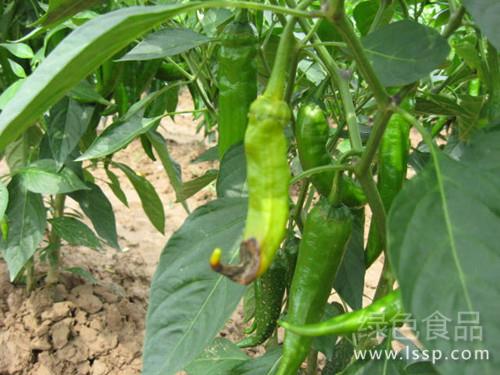
Vegetable calcium deficiency
Calcium deficiency symptoms:Calcium is an immobile element; very little calcium moves in the phloem, and downward movement of calcium in the root system is limited, so young leaves, young tender tissues, and fruits are generally prone to calcium deficiency. It is manifested as stagnation of growth in new parts of the vegetable such as the terminal bud and root hairs, which shrivel and die; new leaves stick together and cannot unfold normally; unfolded new leaves have scorched edges and are incomplete; the vegetable is short and soft with shorter internodes; the fruit apex is prone to sunken, dark brown necrotic lesions; in severe calcium deficiency, the growing point dies.
Causes of calcium deficiency:
1. Soil factors: low available calcium content in the soil cannot meet the needs of calcium-sensitive vegetables; high soil salt content inhibits the vegetable root system's absorption of water and calcium; strong soil acidity affects calcium availability and is unfavorable for vegetable absorption; soil drought raises the soil solution concentration and reduces root water uptake, thereby inhibiting calcium absorption; a shallow, excessively sandy plow layer leads to poor water- and fertilizer-holding capacity, causing calcium loss; excessively clayey soil has poor calcium activity, which is unfavorable for crop absorption.
2. One-sided application of nitrogen fertilizer: In vegetable production, the amount of chemical fertilizer applied is increasing, while the use of organic fertilizer is decreasing. Especially in some high-yield fields and protected facilities, excessive nitrogen fertilizer application not only fails to significantly increase yield and is economically wasteful, but also pollutes the environment. There is an antagonistic effect between nitrogen and calcium; excessive nitrogen fertilizer application reduces the availability of calcium in the soil and affects the vegetable's absorption of calcium.
3. Imbalanced water supply: When water is supplied normally and the vegetable grows normally, the water supply among the vegetable's organs is balanced, and calcium absorption can meet the vegetable's needs; when the soil is too dry or too wet, the available calcium content decreases, affecting vegetable absorption. The mobility of calcium in the soil decreases and its diffusion rate slows, so the vegetable root system's absorption of calcium through the mass flow mechanism is limited.
4. Root injury: When there is excessive soil moisture, it causes poor root development in vegetables, and applying unrotted organic fertilizer or fertilizer at too high a concentration causes root burn, thereby affecting water absorption and also leading to calcium deficiency.
Prevention and control measures:
1. Apply rotted organic fertilizer and supplement calcium with base fertilizer.
Organic fertilizer is comprehensive and rich in nutrients, can improve soil physical and chemical properties, enhance the soil's water- and fertilizer-holding capacity, reduce drought damage, and promote the vegetable's absorption of calcium. At the same time, rotted organic fertilizer can avoid damaging the root system. Generally, in conjunction with plowing, apply 2000-3000 kg of rotted organic fertilizer per mu, plus 30-50 kg of superphosphate, to achieve calcium supplementation as base fertilizer.
2. Apply lime reasonably to improve and build up the soil.
Lime is a commonly used calcium fertilizer. Applying lime on acidic soil helps raise soil pH, improve soil structure, and also helps reduce diseases, increase yield, and improve quality. The amount of lime applied is related to soil type, pH, and crop species. Generally, 40-80 kg of quicklime or hydrated lime per mu is more suitable. The amount of lime for sandy soil should be appropriately reduced; when used for soil improvement, 150-250 kg per mu should be applied.
3. Deep plowing, sun-drying of clods, and plastic film mulching cultivation.
Deep plowing and sun-drying of clods fully mature the soil, improve soil physical and chemical properties, and enhance water- and fertilizer-holding capacity; using plastic film mulching in vegetable cultivation keeps soil moisture relatively stable and reduces calcium loss.