Key points for covered cultivation of greenhouse asparagus: multi-layer covering improves heat retention
Using multi-layer covering methods such as greenhouses, inner sheds, small arch sheds and plastic film to cultivate winter and spring asparagus can significantly improve the cold protection and heat retention capacity of the shed, and achieve high yields of asparagus in winter and spring.
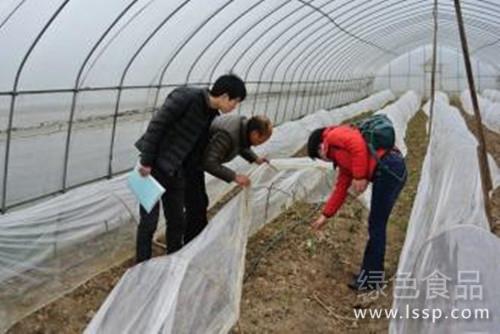
Multi-layer covering of asparagus
Cultivation points: (1) Variety selection. The price of greenhouse winter and spring asparagus before March is 3 times higher than later, which shows the importance of early maturity of the variety. At the same time, characteristics such as strong disease resistance, thick spears, high yield and good quality should also be taken into account. Based on many years of practice, California Early is suitable. Before covering with film, remove withered stems and leaves and weeds in the field, carry out intertillage and loosening of the soil, apply base fertilizer in furrows, and water appropriately according to soil moisture to improve fertilizer use efficiency.
(2) Temperature and humidity control. Timely uncover and cover the small arch shed film and non-woven fabric according to weather conditions. During the day, the shed temperature should be controlled at 20-30°C, and at night at about 15°C. In cold weather or rainy and snowy days, delay uncovering the film in the morning and cover earlier in the afternoon. When the shed temperature exceeds 20°C, uncover the small arch shed film and non-woven fabric to carry out management such as spear emergence and harvesting. When the shed temperature exceeds 30°C, appropriately uncover the film on the leeward side of the greenhouse for ventilation and air exchange, and cover for heat retention around 4 p.m. Multi-layer covering has strong moisture retention, so appropriate ventilation should be carried out at noon to reduce the humidity of the small arch shed and soil and prevent disease occurrence.
(3) Water and fertilizer management. According to soil moisture, use drip irrigation under the film, not furrow irrigation, to reduce the humidity in the shed as much as possible. Before multi-layer covering, apply a sprouting fertilizer, generally from late December to early January, applying 1000 kg of organic fertilizer, 300 kg of ternary compound fertilizer, 15-20 kg of superphosphate and an appropriate amount of micro-fertilizer per mu. From late February to early March, as the temperature rises, the germination of asparagus bud scales and the growth rate of young spears accelerate, and a large number of new roots form, requiring sufficient nutrients. Apply 1000 kg of organic fertilizer and 20 kg of urea in furrows per mu.
(4) Pest and disease control. The main diseases of asparagus are stem blight and root rot. Use azoxystrobin, iprodione, carbendazim and other chemicals for root drenching or spraying. For stem blight, 40% iminoctadine tris(albesilate) wettable powder plus white latex adhesive can also be used to coat the stems. The main pests include noctuids, aphids, thrips, etc., occurring mainly from March to May. Focus on trapping and killing with poison bait, yellow boards, insect-killing lamps, etc., combined with spraying control using trichlorfon, beta-cypermethrin, phoxim and other chemicals.
(5) Spear emergence management. For greenhouse winter and spring asparagus cultivated with multi-layer covering, early-maturing varieties can emerge within 1 week. Check frequently and promptly pierce the plastic film to allow young spears to grow smoothly and prevent the spear tips from bending.
(6) Retaining mother stems in spring. Retaining spring mother stems is very important. From late March to early April, select and retain 3-4 healthy mother stems per plant that are evenly distributed, free of pests and diseases, and about 1 cm thick in stem diameter; harvest all the rest. The number of retained mother stems should be appropriately increased according to the growth years and cultivation density of asparagus. After harvesting ends, apply sufficient fertilizer for plant growth.