What are the specific insecticides for diamondback moth? Several highly effective pesticides recommended
What harm does the diamondback moth cause? What are the specific insecticides for diamondback moth? We ask knowledgeable readers to help explain. The diamondback moth is also called the small green worm or two-pointed tip, and is a worldwide migratory pest. The diamondback moth mainly harms vegetable plants such as cabbage, red cabbage, broccoli, bolting mustard, mustard, cauliflower, napa cabbage, rapeseed, radish, and more, so...
 What harm does the diamondback moth cause? What are the specific insecticides for diamondback moth? We ask knowledgeable readers to help explain
The diamondback moth is also called the small green worm or two-pointed tip, and is a worldwide migratory pest. The diamondback moth mainly harms vegetable plants such as cabbage, red cabbage, broccoli, bolting mustard, mustard, cauliflower, napa cabbage, rapeseed, radish, and more. Therefore, Zhongdi Network has compiled the harm and control methods of the diamondback moth, listed in detail below for readers' reference.
Harm caused by the diamondback moth:
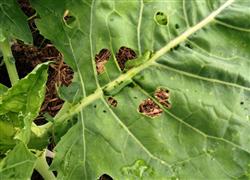
The early-instar larvae of the diamondback moth feed on the leaf mesophyll, leaving the epidermis and forming transparent spots on the leaves, creating holes in the leaves; the 3rd to 4th instar larvae of the diamondback moth can eat the leaves into holes and notches, and in severe cases the entire leaf is eaten into a net-like pattern. During the seedling stage of crops, they often gather on the central leaves to cause damage, affecting head formation. The diamondback moth also harms tender stems, young pods and seeds.
The diamondback moth's annual occurrence and damage clearly shows two peaks, the first from mid-May to late June; the second from late August to late October.
Reasons why diamondback moth is difficult to control:
Reason one: The diamondback moth is small in size, and as long as there is a small amount of food it can survive, making it easy to evade natural enemies.
Reason two: The diamondback moth has strong ecological adaptability. In winter it can survive short periods of severe cold of minus 15 degrees, and can still feed and move in an environment of -1.4 degrees. In summer it can endure scorching heat above 35 degrees, and only summer rainstorms can kill them in large numbers.
Reason three: The diamondback moth has strong pesticide resistance. Due to years of chemical pesticide use for control, large numbers of natural enemies have been killed, the damage of the diamondback moth has worsened day by day, and it quickly developed extremely high levels of resistance to various chemical pesticides. In the 1990s, many places faced rampant diamondback moth outbreaks with no effective pesticide available. Due to the large occurrence area, long damage period and difficulty of control, the diamondback moth gradually replaced the cabbage caterpillar to become the number 1 pest of vegetables.
Reason four: The diamondback moth has a short life cycle. When feeding on cabbage, at temperatures of 28 to 30 degrees, completing one generation takes as little as 10 days.
Control methods for the diamondback moth:
Method one,Trapping: Taking advantage of the diamondback moth's phototactic habit, use black light lamps or other light sources to trap adult moths at night from 7 to 11 o'clock. Trapping is mainly carried out in April to May, or other light sources are used to trap adult moths.
Method two,Release natural enemies of the diamondback moth to control the damage. Among them, Cotesia plutellae, Oomyzus sokolowskii and Diadegma semiclausum have the most obvious effect on controlling diamondback moth numbers.
Method three,Use Bacillus thuringiensis pesticide, 8000 international units/ml per mu, diluted 500~1000 times for spraying; the application dose should not be too high or too low, focusing on controlling young larvae, especially 1st~2nd instar larvae; avoid applying pesticide during high temperatures, preferably on a sunny afternoon or a cloudy day, and do not apply pesticide when the temperature is below 15°C; when spraying, spray the undersides of the vegetable leaves.
Method four,Use a dose of 1% emamectin benzoate emulsifiable concentrate 15-25 ml/mu, mixed with 50 kg of water for spraying. Spray during the peak hatching period of diamondback moth eggs to before the 2nd instar larvae.
Or use a dose of 5% fipronil suspension concentrate 20-40 ml/mu mixed with 50 kg of water for spraying. Spray during the peak hatching period of diamondback moth eggs to before the 2nd instar larvae.
You can also use a dose of 10% chlorfenapyr suspension concentrate 35-50 ml/mu, mixed with 50 kg of water for spraying. Spray during the peak hatching period of diamondback moth eggs or before the 2nd instar larvae.
What is Bacillus thuringiensis?
Control methods for whitefly