What is the fall webworm? An article to help you get to know this insect
What is the fall webworm? What harm does the fall webworm cause? What control methods are there for the fall webworm? We also ask knowledgeable readers to help explain. The fall webworm is also called the American ermine moth and the autumn webworm, and it causes serious damage to landscape trees, economic forests, farmland shelterbelts and so on; it is among the first batch of invasive alien species in China, divided...
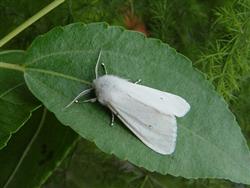 What is the fall webworm? What harm does the fall webworm cause? What control methods are there for the fall webworm? We also ask knowledgeable readers to help explain
The fall webworm is also called the American ermine moth and the autumn webworm, and it causes serious damage to landscape trees, economic forests, farmland shelterbelts and so on; it is among the first batch of invasive alien species in China, and is distributed in Yunnan, Guangxi, Guangdong, Jiangxi, Zhejiang, Hunan, Guizhou, Hubei and Sichuan in China and other places. It is a quarantine pest of worldwide concern. Therefore, Zhongdi Network has compiled the harm and control methods of the fall webworm, listed in detail below for readers' reference.
The harm caused by the fall webworm:
The larvae of the fall webworm often gather on leaves and spin silk webs as nests, feeding on the leaves inside them. The larval webs of the fall webworm can sometimes reach 1 m or more in length, loose and irregular, wrapping twigs and leaves into the web, shaped like a canopy. Because it often appears from midsummer to early autumn, it is called the autumn webworm.
The 1st to 2nd instar larvae of the fall webworm only feed on the leaf mesophyll. In severe cases, all the leaves of the whole plant are eaten bare, leaving only the veins, and the entire leaf takes on a transparent gauze-like appearance. The 3rd instar larvae begin to bite the leaves into notches. The 4th instar larvae begin to split into several small groups, forming several webs. At the end of the 4th instar, the larvae's food intake increases greatly, and after the 5th instar they enter a single-feeding gluttonous stage.
Throughout the larval stage, the fall webworm feeds extremely heavily, causing plants to grow weakly, with low stress resistance, reduced fruit quality, and some branches or even the whole plant dying. Severely affected fruit trees suffer serious reductions in fruit yield, sometimes resulting in no fruit set that year or even the next. Affected trees, due to weakened vigor, are prone to attack by wood-boring insects, fungi and bacteria, greatly weakening their cold resistance and disease resistance.
The growing environment of the fall webworm:
When the ambient temperature is above 18-19°C and the relative humidity is around 70%, overwintering adult fall webworms emerge in large numbers. After the adults emerge, the males and females mate from 0.5-1 hour before sunrise the next morning, and mating can last 5-40 (average 14-16) hours. They mate only once in their lifetime, and shortly after mating, the female lays eggs. The adults are not strong in flight ability or phototaxis. When laying eggs, the female shows obvious selectivity toward the host, preferring to lay single-layer block-shaped eggs on the undersides of the leaves of maples, mulberries and fruit trees. Each egg mass contains 500-700 eggs, with a maximum of more than 2000 eggs. The eggs laid by the adults adhere very firmly and are not easy to fall off; the eggs are covered with hairs, making it difficult for rain and natural enemies to invade.
For the development of fall webworm eggs, the optimum temperature is 23-25°C and the relative humidity is 75-80%. As long as the temperature and humidity are suitable, the hatching rate can reach more than 96%, and even if the leaves on which the eggs are laid dry up, there is no effect.
Control methods for the fall webworm:
Method 1: Use insect-attracting lamps to trap and kill adults during the adult emergence period. The insect-attracting lamps should be set in plots where the fall webworm occurred relatively severely the previous year and with open surroundings, to achieve a relatively ideal control effect. Spray pesticide within a range of 50-100 m from the center point of the lamp to kill the lamp-attracted adults.
Method 2: Chouioia cunea is a natural enemy of the fall webworm and achieves control by parasitizing fall webworm pupae. Releasing Chouioia cunea not only has a good control effect and long duration, but also causes no pollution to the environment and is pollution-free, allowing a Chouioia cunea population to form in nature, gradually achieving the goal of biological control of harmful organisms such as the fall webworm. (Because the larvae wrap the leaves on which they were born in webs, pesticides may have little effect.)
Method 3: During the larval damage period, use a 1000-fold dilution of 45% profenofos-phoxim, or a mixed solution of 1500-fold 20% fenvalerate + 2000-fold Leke (5.7% emamectin benzoate), or a 1500-2000-fold dilution of 40% acetamiprid-chlorpyrifos to spray and kill the larvae, and it can be used 1-2 times consecutively with an interval of 7-10 days. Pesticides can be rotated to delay the development of resistance.
Method 4: During the occurrence period of the fall webworm, spraying with a 1000-fold dilution of 80% dichlorvos emulsifiable concentrate, a 2500-fold dilution of 2.5% deltamethrin emulsifiable concentrate, or a 2300-fold dilution of 4.5% beta-cypermethrin emulsifiable concentrate can all effectively control the harm of this insect.
How to use carbosulfan
What is Bacillus thuringiensis?