Cold wave and heavy snow arrive: key technical points for cold and freeze protection of Zhejiang shiitake mushrooms
It is currently the fruiting period of shiitake mushrooms, but affected by a strong cold wave, Zhejiang Province will experience severe rain, snow and freezing weather from the 20th to the 25th. To avoid the mushroom stick mycelium being frozen due to abnormal weather, which causes mycelium hypoxia, reduced vitality, and softening and rotting of mushroom sticks, mushroom growers should strengthen management and do the following work well:
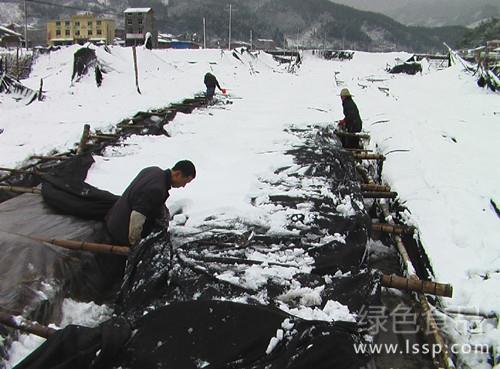
Mushroom greenhouse snow disaster
I. Management before rain and snow:
1. Strengthen insulation management of shiitake mushroom greenhouses. Small arched sheds can be built inside the greenhouse; films, straw curtains and other coverings can be added outside the shed for insulation and dehumidification. Use plastic film as a skirt around the bottom of the shed to reduce cold air invasion from the bottom; block gaps to minimize heat loss through gaps; reduce the number of entries and exits from the mushroom house, so that the temperature inside the shed can be 3--5 degrees higher than outside, basically ensuring the maintenance of mycelial activity.
2. Stop spraying water and keep the material surface as dry as possible (at low temperatures, the shiitake mushroom mycelium enters a dormant state, and spraying water can easily cause death).
3. Timely remove accumulated ice and snow on the shed roof and around it to prevent the mushroom shed from collapsing.
4. Dig drainage ditches around the mushroom shed to keep drainage smooth and avoid rain and snowmelt from invading the mushroom substrate. Rush-harvest shiitake mushrooms that can be harvested or are about to be harvested; do a good job of insulation and warming.
5. Inspect and reinforce the shed frame to prevent collapse under heavy snow.
6. According to the snow situation, when necessary, remove coverings to reduce the pressure on the mushroom shed, prevent freezing rain from causing the mushroom shed to collapse, protect the shed and reduce losses.
7. For mushroom sheds with "people and mushrooms living together," complete personnel evacuation before rain and snow arrive to ensure the safety of mushroom growers.
II. Handling after rain and snow:
1. Remove accumulated snow and clear ditches for drainage
(1)For edible fungi cultivated in open fields (substitute-material black fungus, shiitake mushrooms cultivated in semi-basements), drain the field water from melting ice and snow, minimize the soaking time of mushroom sticks (mushroom beds) in snow water, and prevent mycelium hypoxia inside the mushroom sticks, reduced vitality, and softening and rotting of mushroom sticks;
(2)For facility cultivation or factory cultivation, timely remove ice and snow on the top and around the mushroom shed (house) to prevent the mushroom shed from collapsing. Dig drainage ditches around the mushroom shed to keep drainage smooth and avoid rain and snowmelt from invading the mushroom substrate.
2. Do a good job of ventilation. Keep the air fresh, reduce humidity, and reduce diseases. If diseases occur, timely isolate and manage them or carry out harmless treatment.
3. After temperatures steadily rise, timely clean the mushroom beds and remove dead shiitake mushrooms. After the mycelium resumes growth, resume routine management.