Control Methods for Yellowing Heart Leaves of Eggplant in Greenhouses During the Low-Temperature Period of Deep Winter
During the low-temperature period of deep winter, the heart leaves of long eggplants in greenhouses tend to turn yellow, which reduces photosynthetic efficiency and affects yield. Symptoms: yellowing begins between the veins of the lower leaves of the eggplant, appearing as irregular clumped yellow patches mixed with brown sunken spots; if relatively severe, it causes the leaves to become mushy and withered, gradually spreading upward, while the top new leaves become lighter in color and drop off.
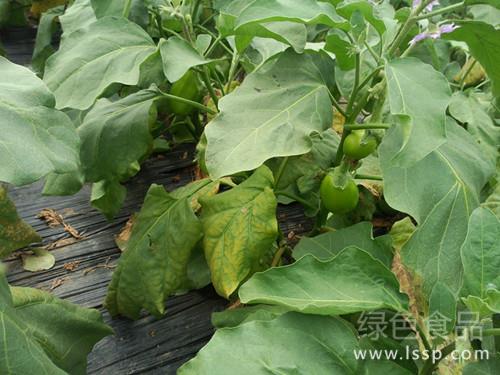
Yellow leaves of eggplant
Based on an analysis of the greenhouse conditions, the root cause of yellow leaves in eggplant is excessively low soil temperature. Especially when the soil temperature is below 10°C, long eggplants are prone to low-temperature stress, which weakens root activity, so the mineral nutrients absorbed cannot meet the growth needs of the eggplant, making yellowing of the heart leaves caused by nutrient deficiency likely to occur.
Many vegetable growers spray foliar fertilizers containing zinc and iron to supplement trace elements and promote the leaves to turn green again, but this method does not address the root cause. If improved fundamentally, it is necessary to promote the absorption of trace elements by the eggplant roots to alleviate yellowing of the heart leaves.
During operation, the principle to adhere to is: care for the root system and improve the absorption function of the eggplant roots.
Specific methods:
1. When the weather is clear and fine, irrigate heavily once, with watering preferably penetrating to a soil depth of 25-30cm; at the same time, apply a water-soluble fertilizer with a complete nutrient content along with the water to supplement the various nutrient elements needed by the eggplant; afterward, when watering and fertilizing, maintain light but frequent irrigation.
2. During the growth period of long eggplants, avoid the soil becoming too dry, so as to prevent sudden watering from damaging the eggplant roots.
3. Because before the Spring Festival the price of long eggplants is high, many vegetable growers keep as much fruit as possible. As a result, the nutrient supply is insufficient and the leaves tend to turn yellow; in addition, some vegetable growers focus only on promoting fruit development, increasing the use of potassium fertilizer while neglecting nitrogen supplementation.
The peak fruiting stage of long eggplants is a period when vegetative growth and reproductive growth proceed together, and both require sufficient nutrients. If only potassium is supplemented, it will inevitably cause nutrient deficiency. Therefore, it is recommended that vegetable growers supplement nitrogen while supplementing potassium fertilizer; for this, a 15:10:15 water-flush fertilizer can be used.
In addition, after realizing that the eggplant is nutrient-deficient, many vegetable growers want to improve the situation by using microbial bacterial fertilizer. Obviously, this also does not target the cause. The role of microbial bacterial fertilizer is to improve the soil and, by optimizing soil structure, promote the eggplant's absorption of soil nutrients, but it cannot directly supply large amounts of nutrient elements such as nitrogen, phosphorus, and potassium. It can play a role in promoting and nourishing roots by raising the temperature inside the greenhouse, especially the nighttime temperature.