Celery heart rot causes the heart leaves to wither and scorch, and the roots, stems, and leaves to die. How can it be prevented and controlled?
Celery heart rot, also called heart rot disease, mainly damages the heart leaves. In the early stage of the disease, the tender tissue at the growing point of the heart leaves turns from green to brown, then spreads until the heart leaves wither and scorch; afterward, the celery roots and some stems and leaves die. This disease rarely appears in the early growth stage and mostly begins to occur when there are 11 to 12 true leaves.
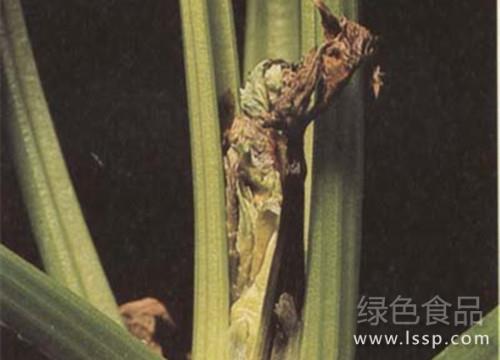
Celery heart rot
1. Causes of the disease: Celery heart rot is a physiological disease caused by calcium deficiency. A lack of calcium and boron in the soil and excessively high salt concentration make calcium absorption difficult; under dry conditions, applying too much nitrogen fertilizer makes it difficult for celery roots to absorb boron, leading to insufficient calcium absorption, and all of these can cause celery heart rot. In humid environments, with high temperature and high humidity, long periods of continuous rain, and excessive soil moisture, the heart leaves may be infected by miscellaneous bacteria and also rot.
2. Environments suitable for susceptibility to the disease:
Continuous cropping for many years, low-lying waterlogged land with poor drainage; excessive application of nitrogen fertilizer and potassium fertilizer causing overly tender growth; saline-alkali land or high salt concentration in the soil, or high temperature, low temperature, or drought can all block celery's absorption of boron and calcium and cause heart rot.
3. Prevention and control methods:
(1) Use soil testing and formula fertilization to adjust the levels of nitrogen, phosphorus, potassium, boron, calcium, and other elements in the soil; when the disease occurs, spray a 0.3%-0.5% calcium nitrate solution.
(2) Choose non-saline-alkali fields with high, dry terrain and cultivate them with deep furrows and high beds; do not use flood irrigation; apply heavy amounts of farmyard manure to improve the soil; use nitrogen, phosphorus, potassium, and trace elements scientifically; when temperatures are high, cool the crop; when temperatures are low, keep it warm. When plowing, broadcast an appropriate amount of dry lime; the nutrient soil for raising seedlings should use sterile soil, and it should be sun-dried for more than three weeks before use; maintain a reasonable planting density, and when the disease occurs, promptly remove diseased leaves and diseased plants and carry them out of the field to be burned, and apply medicine or quicklime to the diseased holes.
(3) Control agents: when celery has 5-8 leaves, spray the leaf surface with 300-400 times diluted superphosphate solution, or 300 times diluted calcium chloride solution, or 400 times diluted 0.1% calcium nitrate solution, once every 15 days, spraying 2-3 times. For celery heart leaf rot caused by a humid environment, when draining water and reducing humidity, spray an appropriate amount of fungicide.