How to control cabbage sclerotinia rot with brown decay and death of diseased parts
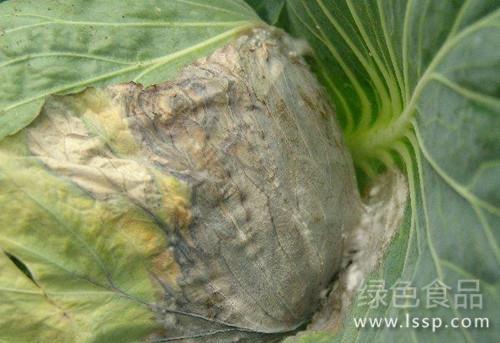
Cabbage sclerotinia rot
I. Symptom characteristics:
After seedlings are infected, water-soaked light brown lesions appear on cabbage leaves, with indistinct edges, and the diseased tissue becomes soft and rots, causing damping-off. When affected during the heading stage, water-soaked sunken lesions form on the leaf bases and stem base near the ground, initially light brown, later turning brown or grayish white, and the affected parts rot. When the environment is humid, white downy mold and dark brown mycelium grow on the affected parts, forming black mouse-dropping-like sclerotia. The lesion at the stem base girdles the stem, and the whole plant dies after one week.
II. Disease occurrence pattern:
Cabbage sclerotinia rot is a fungal disease caused by parasitism of Sclerotinia sclerotiorum. The pathogen survives the summer or winter as sclerotia remaining in the soil or mixed with seeds. Sclerotia do not require dormancy; under moist conditions, the sclerotia can germinate and produce ascospores, which spread by airflow. The optimum temperature for pathogen development is 20°C. The mycelium or ascospores produced by the sclerotia spread in the field with wind and rain or irrigation water. Low temperature with little sunlight, cloudy and rainy humid weather, and heavy disease occurrence are more serious. Excessive nitrogen fertilizer application, low-lying terrain, and poor drainage all favor the occurrence of this disease.
III. Control methods:
1. Agricultural control. Before sowing, rinse cabbage seeds with 10% salt water or 10%-20% ammonium sulfate solution, then dry them and sow. Before sowing, adjust the seedbed temperature to 55°C and treat for 2 hours, which can kill sclerotia in the soil. Rotate cabbage with cruciferous crops for 2-3 years. Deeply plow the land to bury sclerotia remaining on the soil surface below 10 cm. Apply sufficient base fertilizer, increase phosphorus and potassium fertilizer, and do not apply excessive nitrogen fertilizer alone. Strengthen drainage to keep the soil moderately dry. When diseased plants are found, pull them out promptly and take them out of the field, then burn or deeply bury them. When watering, use small amounts and water frequently, and prevent flooding irrigation.
2. Chemical control. In the early stage of disease onset, spray promptly for protection, focusing on spraying the stem base, old leaves, and ground of cabbage. For each mu, mix 2-2.5 kg of 5% chlornitrofen powder with 15 kg of fine soil and spread it between the rows. For spraying, choose 50% procymidone wettable powder at 2000 times dilution, or 40% dimethachlon wettable powder at 800 times dilution, or 50% iprodione wettable powder at 1000-1500 times dilution, or 50% procymidone wettable powder at 1000 times dilution, spraying once every 7-10 days, for 2-3 consecutive sprays.