Busy Spring Mushroom Production in the North: Points to Note When Making Shiitake Bags
Spring is the busiest season for shiitake (Lentinula edodes) production in the north, and March—April is the time for making shiitake bags. Based on past problems in bag-making and mycelium running, here are a few suggestions for shiitake growers to refer to.
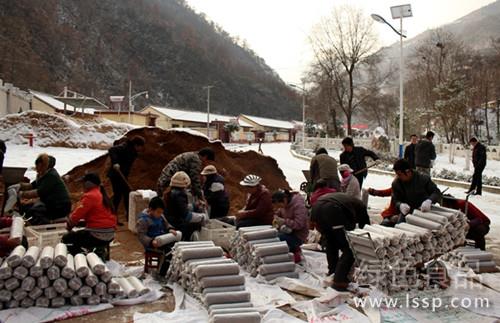
Making Shiitake Bags
Bag filling: The moisture content of the substrate should be controlled at 65%-70%. The standard for judging this: when you grip the substrate firmly, it forms a ball, water seeps out between your fingers but does not run down, and it crumbles apart after you let go. Within this moisture range, appropriately increasing the moisture content can raise shiitake yields. During bag filling, take care that the substrate does not puncture the bag; torn bags must be dealt with promptly. The substrate should be packed at a suitable tightness; if too loose, the mycelium grows quickly but is not robust, which affects yield.
Sterilization process: Before each sterilization, carefully check the sterilization equipment to prevent unnecessary losses. Bag sterilization must reach the required time, and should be appropriately extended according to how early or late the bags are made.
Cooling the logs: After the bags are taken out of the sterilization pot, check for damage; if damage is found, immediately seal it with tape, and every bag must be checked. When handling the bags, handle them gently and set them down gently to prevent scratches and tears. After sterilization, place the bags directly into the inoculation room (shed) to cool naturally.
Inoculating the logs: Inoculation movements should be quick and accurate to reduce the chance of contaminant infection in the substrate; when lifting the tape, avoid pulling vertically with force, which causes air to flow in and out of the log and leads to contaminant infection; when increasing the amount of spawn used, the inoculation amount should be just enough to tightly fill the inoculation hole with a slight bulge, which can prevent contaminants from entering; during inoculation, when the spawn passes over the alcohol lamp, it must be done quickly to avoid burning the mycelium; inoculation is best done at night or early in the morning, when the temperature is lower and the concentration of contaminant spores in the air is also low; in the inoculation room, try to avoid people walking around and talking, so as not to hinder the inoculation effect for shiitake; during inoculation, the substrate temperature inside the log should not exceed 28°C.