Sugarcane frost damage symptoms and control methods, cold wave causes heavy crop losses
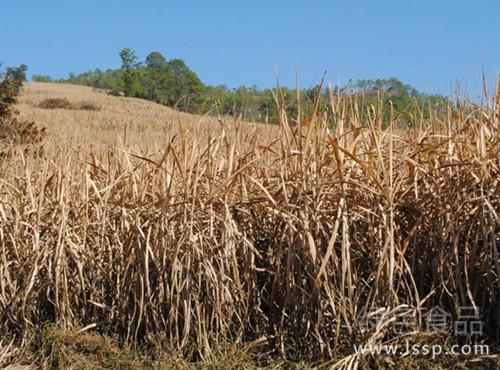
Sugarcane frost damage
I. Sugarcane frost damage symptoms:
1. Growing point and heart leaf: In frost-damaged sugarcane, the heart leaf dies first, and the growing point dies afterward. After the heart leaf dies, it turns black and is easy to pull out. If the growing point dies, no new leaves can emerge after the frost. If the growing point does not die, after the heart leaf is frozen, the new leaves that unfold show butterfly-shaped white spots, and the heart leaf can continue to grow.
2. Leaves: Damaged leaves cannot carry out photosynthesis and dry up to a grayish-white color.
3. Cane buds: The severity of frost damage to cane buds is related to the age of the bud and the coverage of the leaf sheath. The young buds on the upper part of the cane stem have weak cold tolerance; after frost damage they turn dark brown, and many buds die. The lower buds are older and covered by leaf sheaths, so they have stronger cold tolerance; after frost damage they turn light brown, and few buds die. However, when frost is severe, it often kills all the cane buds above ground and even underground.
4. Cane stem: When frost damage to the cane stem is severe, part or all of its tissue takes on a cooked appearance, with reddish-brown spots on the internodes, sometimes the internodes split open, the sucrose gradually hydrolyzes, and there is a sour, rotten smell.
II. Measures for preventing sugarcane frost damage and restoring vigor:
1. Smoke to drive away the cold. Materials such as rice straw, weeds, cane leaves, rice husks, dry branches, and wood shavings can be used as smoking material. Before and during frost or strongly cold weather, from evening until dawn the next day, on the upwind side of the sugarcane field, set up several fire piles according to the size of the area. Do not let the smoke produce open flame; only release thick smoke so that it spreads through the lower space above the ground, raising the temperature and achieving the purpose of preventing frost and freeze damage. This method is best used under clear skies with no clouds and no wind before frost arrives, and it also works well in strongly cold, overcast, and damp weather.
2. For sugarcane that is not frozen or only lightly frozen, especially new varieties, to prevent a second frost injury, it can be cut promptly with the sheath left on and kept for seed; cover the seed cane with plastic film to ensure there is seed cane for planting the following year.
3. For lightly frozen sugarcane, if conditions permit, irrigate the field as soon as possible to raise the sugarcane field temperature and prevent the frost damage from worsening. Spray potassium dihydrogen phosphate or antifreeze agents.
4. For ratoon cane that was already cut and harvested before the frost damage and winter-planted cane not covered with film, promptly cover them with film, rice straw, cane leaves, etc., to ensure safe overwintering. During cold damage, ratoon cane should not have its rows opened and stools loosened, so as to avoid freezing the cane buds.
5. According to the degree of damage, cut and mill promptly. Following the principle of heavy damage first and light damage afterward, quickly cut, transport, and mill to shorten the time that frozen sugarcane remains in the field and reduce losses in sugar content and yield.