There are many causes of straw mushroom wilt and death, so how do you treat each one accordingly?
In straw mushroom production, patches of small straw mushrooms are often seen wilting and dying. The main causes are several:
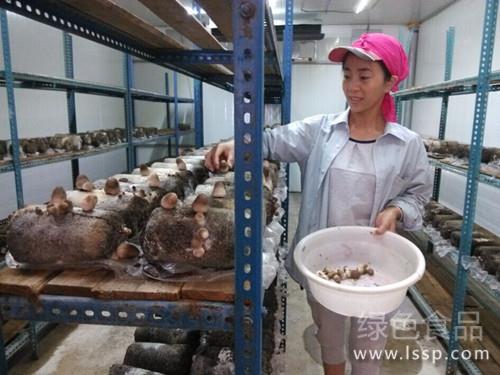
Straw mushroom harvest
1. Poor ventilation: Straw mushrooms are a high-temperature, aerobic species. To raise the shed temperature, growers extend the covering time, which causes too much carbon dioxide in the shed, and the straw mushrooms die from lack of oxygen. But if ventilation is too great, moisture is easily lost, which is also unfavorable for straw mushroom growth. To resolve this conflict, within 4 days after sowing, ventilate for half an hour at about 10 a.m. each day; as the amount of mycelium increases and large numbers of "pinhead mushrooms" appear, gradually extend the ventilation time to 2 hours per day.
2. Sudden temperature changes: Straw mushrooms are a constant-temperature fruiting type of mushroom. The optimum temperature for mycelial growth is 30°C--39°C; below 15°C or above 42°C, growth stops. The fruiting body growth temperature is 28°C--33°C; below 20°C or above 45°C will cause the mushroom buds to wilt and die. Therefore, when the temperature is low, take measures such as double-layer film covering to keep warm; in the heat of midsummer, spray water and build a shade frame to cool down, minimizing the temperature difference in the mushroom house.
3. Unsuitable humidity: Moisture affects straw mushroom growth. If moisture is insufficient, the mycelium grows slowly and the fruiting bodies dry up and die; if moisture is excessive, the mushroom bed is poorly ventilated, causing large numbers of rotten and dead mushrooms. Therefore, suitable humidity must be maintained: the optimum water content of the compost is 70%; during the mycelial growth stage, the relative air humidity is 80%; during the fruiting body growth stage, the relative air humidity is 90%.
4. Unsuitable water temperature: Straw mushroom growth not only requires large amounts of water, but also has strict requirements for water temperature. If water below 23°C or above 40°C is sprayed, the young mushrooms will wilt the next day. Therefore, spray water in the morning and evening, and the water temperature is best at about 30°C.
5. Environment too acidic: Straw mushrooms prefer a slightly alkaline environment. When the compost is acidic (pH below 6.5), they are difficult to grow and are easily infected by contaminant fungi. Therefore, the amount of lime added when mixing the ingredients should reach 5%; after each flush of mushrooms is harvested, spray 1% lime water or 4% plant ash water to raise the pH.
6. Careless picking: When picking, do not touch the young mushrooms that are still growing. If straw mushrooms are densely clustered, wait until most of the straw mushrooms are mature, then pick them together. Correct picking method: press one hand on the growing base of the straw mushroom, and with the other hand twist and lift the mature straw mushroom, reducing damage to the young mushrooms.
7. Spread of pests and diseases: Improper cultivation management can lead to outbreaks of pests and diseases. When the compost is too high in nitrogen, ink cap mushrooms (Coprinus) appear in large numbers and compete with the straw mushrooms for nutrients, causing straw mushroom death, so the nitrogen content must be controlled when mixing the ingredients. When using corncobs, wheat straw, or rice straw as the main material, add 5% wheat bran or 4% fermented decomposed livestock and poultry manure. When using nitrogen-rich cottonseed hulls as the main material, no nitrogen source needs to be added, but be careful to control mite damage. After mites appear, the mycelium in the compost is quickly eaten up, and large numbers of young mushrooms on the bed die. When mixing the compost, spray an 800-fold solution of dichlorvos or trichlorfon for good control results. When mold appears on the surface of the compost, scatter quicklime powder on the contaminated area, and at the same time strengthen ventilation and reduce humidity to inhibit the spread of contaminant fungi, ensuring straw mushroom growth.