Toona sinensis prices remain high, how do you cultivate dwarfed vegetable-type Toona sinensis?
For vegetable-type Toona sinensis, it is best to choose varieties such as "Hongyou Toona," "Hongya Lü Xiangchun," and "Hongxiang No. 1." These varieties sprout early, tolerate low temperatures, have brownish-red bud stalks and tender leaves, and their leaves are crisp, tender, and juicy, with a sweet taste and a strong aroma.
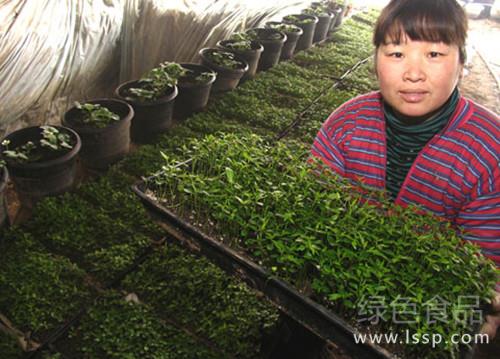
Toona sinensis seedling raising
Sowing for seedlings: In March, prepare the land and make raised beds 1.5 m wide. Soak Toona sinensis seeds in warm water at 30-35°C for 24 hours, then place them in an environment of about 25°C to promote germination. After germination, broadcast sow, using about 1.5 kg of seed per mu. After sowing, cover with soil, water thoroughly, and cover with plastic film or rice straw to keep warm and moist. After seedlings emerge, remove the covering. From March to April, when there are 2-3 leaves, thin the seedlings to a plant spacing of about 15 cm, and plant the thinned seedlings in another bed. From May to June, loosen the soil, weed, and fertilize. From July to August, apply mainly nitrogen fertilizer, with phosphorus and potassium fertilizers added, together with loosening the soil and weeding.
Transplant in time: It is best to choose a site with loose soil, a deep soil layer, sandy soil, and convenient drainage and irrigation to establish a Toona sinensis plantation. After deep plowing and land preparation, apply 5-7 tonnes of decomposed organic fertilizer per mu. Plant Toona sinensis from leaf fall until before bud break; either autumn planting or spring planting is fine. Generally, plant in holes, with a planting density of 40 cm × 50 cm, about 3,000 plants per mu. When planting, plant deeply, spread the root system out, firm the soil after filling, and water thoroughly 1-2 times.
Dwarfing and shaping: If planted Toona sinensis has not undergone dwarfing and shaping, it should be stumped, that is, cut off the top of the seedling stem at 15-20 cm to encourage 2-3 side branches on the lower part as first-order side branches. When the first-order side branches grow to more than 30 cm, cut off the shoot tips, leaving 5-10 cm stubs to encourage second-order side branches.
Dwarfing treatments include pinching, shortening, and stumping. From June to July, shorten or pinch the current-year branches, leaving 15-25 cm of stem; in about 20 days, 2-5 side branches can sprout, and in autumn they grow into plump short branches 10-15 cm long, and the following year Toona sinensis buds can be harvested. For Toona sinensis or branches that grow too vigorously, pinch once more. Pinching and shortening can increase the number of buds, raising yield by 1.5-2 times.
Field management: After planting, water once thoroughly, then water once every half month. Keep the soil alternately dry and moist. After watering or rain, cultivate and weed in time to prevent waterlogging. Apply topdressing once each in April-May and July, each time applying 10-15 kg of urea per mu; after August, apply nitrogen fertilizer once more and control watering; in September, apply superphosphate once, 50-60 kg per mu, to promote lignification of Toona sinensis and increase cold resistance. In late February, cover the base of mature trees with plastic film to encourage early sprouting. 3-5 days before the first harvest, apply 20-25 kg of urea per mu; when new shoots grow to 30 cm, apply foliar topdressing, spraying 0.2-0.3% urea or potassium dihydrogen phosphate solution 2-3 times, used alternately. From June to July, after heavy harvesting, topdress 2-3 times, applying 20-25 kg of compound fertilizer per mu. After leaf fall, combine with deep plowing and apply decomposed organic fertilizer.
Toona sinensis has strong disease resistance and few pests and diseases; the main ones include leaf rust, root rot, and the spotted lanternfly. Agricultural control should be the main approach, supplemented by targeted chemical control.