How to prevent pests that suck sap, chew leaves, and damage wheat roots in winter wheat
Spring is the season when wheat pests are most severe. The main wheat pests include armyworms, underground pests, wheat aphids, wheat blossom midges, and wheat red spiders. Prevention work against wheat pests cannot be neglected, so how should it be done?
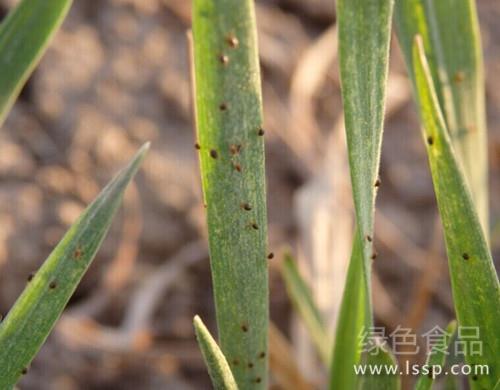
Wheat pests
I. Underground pests:In the early planting stage, soil treatment is very helpful for reducing underground pests. Before plowing, use 300 grams of 50% phoxim emulsifiable concentrate per mu plus 25 kg of water, spray evenly on the soil surface with a sprayer, then prepare the land; the effect is relatively good. Seed dressing with chemicals can also reduce the harm of underground pests to wheat. One method is to dress seeds with phoxim at a concentration not exceeding 0.2%; another is to use 40% dimethoate emulsifiable concentrate at 1 kg per 40-60 kg of water to dress seeds, pile and cover them for more than 4 hours, which can kill mole crickets.
II. Wheat aphids:1. Agricultural control, namely rational crop layout; selecting wheat varieties with insect resistance and disease tolerance; appropriate late sowing, implementing winter irrigation, and harrowing and compacting in early spring. 2. Chemical control: ① Use 40% dimethoate emulsifiable concentrate at 2000-3000 times dilution or 50% phoxim emulsifiable concentrate at 2000 times dilution, mix with water and spray; ② Use 10 grams of 50% pirimicarb wettable powder per mu, mix with 50-60 kg of water and spray; ③ Use 50% pirimicarb at 4000-5000 times dilution for spray control. ④ Use 20 ml of 3.15% abamectin-acetamiprid emulsifiable concentrate per knapsack of water for spraying; ⑤ Use 2 grams of 70% imidacloprid water-dispersible granules per knapsack of water or 10 grams of 10% imidacloprid per knapsack of water plus 20 ml-30 ml of 2.5% lambda-cyhalothrin for spray control.
III. Wheat blossom midge:Prevention can be carried out in two time periods, namely the larval and pupal stages and the adult stage. From wheat jointing to booting stage, use 2 kg of 5% chlorpyrifos granules per mu or 2 kg of 2.5% isofenphos-methyl granules or 5 kg of 3% phoxim granules, mix slightly with 20 kg of wet sand and soil, spread over the field surface, then water; this is the control method for larvae and pupae. When 50%-70% of wheat has headed, use 30 grams of 10% imidacloprid wettable powder per mu or 40 ml of 4.5% beta-cypermethrin emulsifiable concentrate or 50 ml of 40% dimethoate emulsifiable concentrate plus 50 ml of 80% dichlorvos emulsifiable concentrate, mix with 30 kg of water, and spray for control. To ensure the effect, combine with aphid control and spray again after 7 days.
IV. Wheat armyworm:1. Taking advantage of the habit of adult armyworms mostly laying eggs on leaves, insert 60-100 millet straw bundles or rice straw bundles per mu, replace them every 5 days, and burn the replaced straw bundles in a centralized manner; 2. Sugar-vinegar basin: mix 6 parts sugar, 3 parts vinegar, 1 part white liquor, 10 parts water, and 1 part 90% trichlorfon evenly, or use pickle water plus an appropriate amount of pesticide, and place it during the adult occurrence period; 3. Black light traps to kill adults; 4. Chemical control: ① 2.5% trichlorfon powder or 5% tetrachlorvinphos powder, timing: before the larvae reach the 3rd instar. Method: dust or spray, 1.5-2.5 kg per mu. ② 90% crystalline trichlorfon at 1000 times dilution; 50% malathion emulsifiable concentrate at 1000-1500 times dilution; 90% crystalline trichlorfon at 1500 times dilution plus 40% dimethoate emulsifiable concentrate at 1500 times dilution, timing: before the larvae reach the 3rd instar. Method: spray, 75 kg of the prepared solution per mu.
V. Wheat red spider:1. Agricultural control; 2. Chemical control. Agricultural control: ① Fine land preparation. Early spring intertillage can kill large numbers of the pests; after wheat harvest, shallow plowing to destroy stubble; after autumn harvest, deep plowing early, adapting to local conditions, and crop rotation to eliminate oversummering eggs and adults and reduce pest sources. ② Strengthen field management. First, apply sufficient base fertilizer to ensure uniform and strong seedlings, and increase the application of phosphorus and potassium fertilizers, while spraying New High Lipid Film to ensure no fertilizer deficiency later and enhance wheat's own pest and disease resistance. Second, irrigate and weed in a timely manner. Third, spray Zhuangsui Ling at the booting stage to strengthen wheat physiological functions and improve pollination and grain filling quality. Practice has shown that red spiders are unlikely to occur in wheat fields that are not dry, have few weeds, and grow well. Chemical control method: use 20% pyridaben wettable powder per mu or 1.8% abamectin emulsifiable concentrate plus New High Lipid Film at 800 times dilution for spray control.